

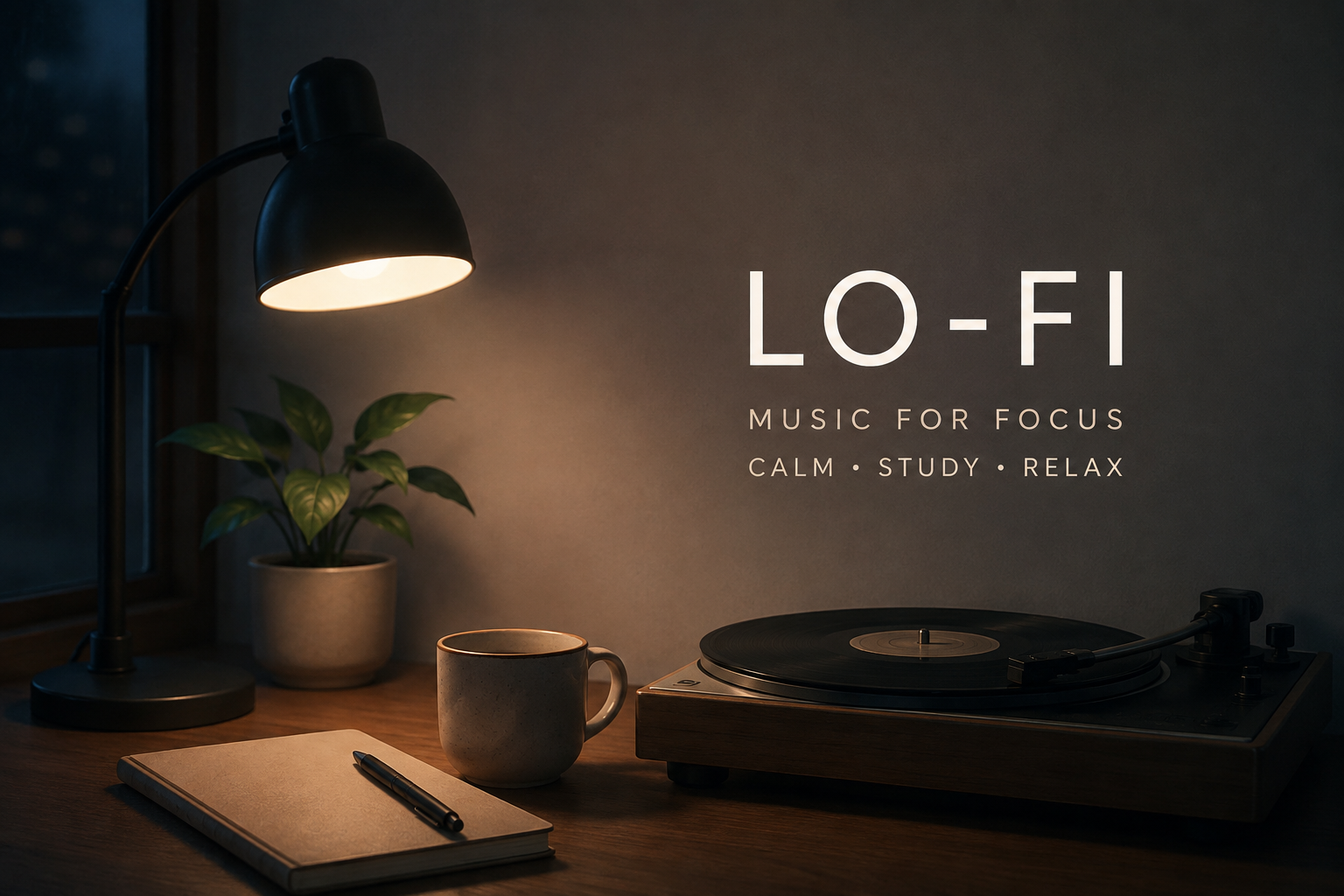
Lo-fi music has become one of the most recognizable sounds of the internet. You have probably heard it while studying, working, reading, relaxing, or simply scrolling through YouTube. The sound is usually calm and repetitive, often mixed with soft beats, warm melodies, vinyl crackle, background noise, and slightly imperfect recordings.
But what exactly is lo-fi music? Is it simply music with lower sound quality, or is there more to the genre?
Lo-fi, short for “low fidelity,” refers to music that intentionally includes imperfections or sounds that would normally be removed from a polished recording. These imperfections can include tape hiss, vinyl crackle, background noise, distorted sounds, slightly off-beat drums, or muffled textures.
Over time, lo-fi has developed from a recording style into a broader musical culture. Today, lo-fi hip hop, lo-fi beats, chillhop, ambient lo-fi, and similar styles have millions of listeners around the world.
So why has this seemingly simple style become so popular? The answer has a lot to do with its relaxing sound, simplicity, nostalgia, accessibility, and the way people use music in their everyday lives.
What Does Lo-Fi Music Mean?
The word “lo-fi” comes from “low fidelity.” Fidelity refers to how accurately a recording reproduces the original sound. High-fidelity recordings are designed to sound clean, detailed, and close to the original performance.
Lo-fi music takes a different approach.
Instead of trying to remove every unwanted sound, producers may intentionally keep certain imperfections in the recording. A little tape noise, an imperfect drum hit, or a distorted sample can become part of the character of the track.
However, lo-fi does not necessarily mean that the music is poorly produced.
Modern lo-fi producers often use professional software and equipment to recreate the sound of older recording technologies. They may add effects that imitate cassette tapes, vinyl records, old samplers, or vintage amplifiers.
This gives the music a warm and imperfect character while still allowing the producer to have complete control over the final sound.
What Does Lo-Fi Music Sound Like?
There is no single sound that defines every lo-fi track. Different producers use different instruments, samples, rhythms, and production techniques.
However, many lo-fi songs share some common characteristics.
You will often hear:
- Soft, repetitive drum beats
- Warm piano or electric piano melodies
- Jazz-inspired chords
- Vinyl crackle and tape hiss
- Muffled or filtered sounds
- Simple basslines
- Short musical loops
- Ambient background sounds
- Relaxed tempos
- Sampled vocals or dialogue
The music usually avoids dramatic changes. Instead, it creates a steady atmosphere that can continue in the background without demanding constant attention.
That is one of the reasons it works so well while studying, working, reading, or relaxing.
How Did Lo-Fi Music Become Popular?
Lo-fi music itself is not a completely new idea. Musicians have been experimenting with imperfect recordings for decades.
The broader lo-fi movement developed alongside independent music and home recording. As recording equipment became more affordable, musicians could create music at home without needing access to a traditional recording studio.
This helped make imperfect recordings more acceptable and, in some cases, desirable.
The modern lo-fi sound is also influenced by several older musical styles, particularly jazz, soul, hip hop, funk, and electronic music. Producers began combining sampled melodies and drum patterns with the warm textures of older recording equipment.
The internet then played a major role in bringing the sound to a much larger audience.
YouTube, streaming services, online communities, and long-form music playlists helped turn lo-fi beats into an everyday listening habit. Instead of simply being something people listened to as an album or song, lo-fi became something people could leave playing for hours.
What Is Lo-Fi Hip Hop?
Lo-fi hip hop is probably the style most people associate with the word “lo-fi” today.
It typically combines hip hop-inspired drum patterns with relaxed melodies, jazz samples, simple basslines, and atmospheric production.
A typical lo-fi hip hop track might feature a repetitive drum loop, a mellow piano melody, subtle background noise, and a sample that gives the song a nostalgic feeling.
The structure is usually simple. There may not be a traditional verse and chorus like you would find in mainstream pop music. Instead, a producer may build the entire track around a short loop and gradually introduce small changes.
This makes the music easy to listen to for long periods without becoming overwhelming.
Why Does Lo-Fi Music Sound So Nostalgic?
Nostalgia is one of the biggest reasons people connect with lo-fi music.
Many lo-fi tracks use sounds associated with older technology. Vinyl crackle, cassette noise, tape saturation, radio effects, and slightly distorted samples can remind listeners of older recordings.
Even if someone did not grow up listening to cassette tapes or vinyl records, these sounds can still create a sense of age and familiarity.
The melodies can contribute to this feeling as well. Lo-fi producers often use simple piano chords, jazz-inspired harmonies, guitar samples, or melodies that feel emotionally familiar.
The result is a sound that can feel old and new at the same time.
Why Is Lo-Fi Music So Relaxing?
One of the main reasons people listen to lo-fi is because it creates a calm and consistent atmosphere.
Many lo-fi tracks use relatively slow or moderate tempos and avoid sudden changes in volume or intensity. The repetitive structure can make the music feel predictable without necessarily becoming boring.
The background sounds can also contribute to the experience. You might hear rain, a quiet room, vinyl noise, a crackling fireplace, or distant conversations underneath the main beat.
These sounds add texture without becoming the main focus.
For many listeners, this combination creates music that feels present without demanding attention.
Why Do People Listen to Lo-Fi While Studying?
Lo-fi music has become closely associated with studying and concentration.
Search for “lo-fi study music” online and you will find long playlists and livestreams designed specifically for this purpose. The popularity of these playlists is partly connected to the way lo-fi is structured.
Most tracks have a predictable rhythm and relatively simple arrangement. There are fewer dramatic changes that might pull your attention away from whatever you are doing.
That makes lo-fi useful as background music for activities such as:
- Studying
- Reading
- Writing
- Coding
- Working
- Drawing
- Editing
- Organizing tasks
- Relaxing
Of course, everyone responds to music differently. Some people concentrate better in silence, while others prefer instrumental music in the background.
Lo-fi is popular because it provides an option that feels musical without being overly demanding.
Does Lo-Fi Music Actually Help You Concentrate?
There is no universal answer.
Music can affect people differently depending on the task, the listener, and the type of music being played. Lyrics, sudden changes, and highly energetic songs can be distracting for some people, while instrumental and repetitive music may be easier to keep in the background.
Lo-fi often fits the second category.
Its repetitive rhythms and relatively simple arrangements can create a consistent listening environment. Some people find that helpful when they need to stay focused for a long period.
However, it is important not to treat lo-fi as a guaranteed productivity tool. If you find yourself paying more attention to the music than your work, silence may be a better choice.
Why Does Lo-Fi Use Vinyl Crackle and Tape Noise?
Vinyl crackle and tape noise have become almost symbolic of lo-fi music.
These sounds were once considered unwanted imperfections. Producers would often try to remove background noise during the recording and mastering process.
Lo-fi producers sometimes do the opposite.
They intentionally add these sounds because they give the track texture and character. A small amount of crackle can make a digital recording feel warmer or more organic.
Tape effects can also change the character of a sound. They may introduce subtle saturation, soften high frequencies, or create small variations in pitch.
The important thing is that these effects are usually used as creative tools rather than signs of poor production.
Is Lo-Fi Music the Same as Chillhop?
Lo-fi and chillhop are closely related, but they are not exactly the same thing.
Lo-fi is a broader concept that can describe a production style as well as a type of music. It can include different genres and sounds.
Chillhop is more closely connected to hip hop. It generally combines relaxed hip hop beats with elements of jazz, soul, funk, and electronic music.
There is plenty of overlap between the two styles, which is why the terms are sometimes used interchangeably.
A track can be both lo-fi and chillhop, but not every lo-fi track is necessarily chillhop.
What Instruments Are Commonly Used in Lo-Fi Music?
Lo-fi producers use a wide range of instruments and samples. However, some sounds appear particularly often because they fit the warm and relaxed character of the style.
Piano is one of the most common instruments. Soft piano chords can provide a simple emotional foundation for a track.
Electric piano, guitar, bass, drums, synthesizers, and sampled instruments are also frequently used.
Many producers rely heavily on samples. A short musical phrase can be chopped, rearranged, filtered, and combined with drums to create something completely different from the original recording.
Modern digital audio workstations also make it easy to add effects that imitate older recording equipment.
Why Is Lo-Fi Music So Popular on YouTube and Streaming Platforms?
The internet has played a huge role in the growth of lo-fi music.
Unlike traditional songs that are often designed for a few minutes of focused listening, lo-fi works particularly well in playlists that can continue for hours.
A listener can start a playlist while studying and allow it to continue without needing to constantly choose another song.
Long-form streams have also helped create a sense of community around the genre. Many listeners associate lo-fi with specific visual styles, such as animated bedrooms, rainy windows, city streets, coffee shops, or nighttime scenes.
The combination of music and visuals creates an atmosphere rather than simply presenting a collection of songs.
Streaming platforms have made this kind of listening incredibly convenient.
Why Do Lo-Fi Videos Often Have Similar Visuals?
If you have watched popular lo-fi videos, you may have noticed recurring visual themes.
A person studying at a desk, a rainy window, a warm bedroom, a cup of coffee, city lights, books, headphones, and nighttime scenes are common examples.
These visuals match the emotional character of the music.
The idea is not necessarily to tell a complicated story. Instead, the animation creates a comfortable environment that viewers can return to whenever they want to study, work, or relax.
This has become part of the identity of modern lo-fi culture.
Can You Make Lo-Fi Music at Home?
Yes. One of the appealing things about lo-fi music is that you do not need an expensive recording studio to get started.
A computer, digital audio workstation, headphones, and basic understanding of rhythm and melody can be enough to begin experimenting.
You can create a simple lo-fi track by starting with a drum pattern, adding a chord progression, creating a melody, and then applying effects to give the recording more character.
Some producers also record everyday sounds and use them as background textures.
For example, rain, room noise, a keyboard, or a coffee shop recording can become part of the atmosphere.
The goal is not to make everything perfectly clean. Instead, the production should support the feeling you want the listener to experience.
What Makes a Good Lo-Fi Track?
A good lo-fi track does not need to be complicated.
In many cases, simplicity is part of the appeal. A strong track might be built around a memorable melody, a satisfying drum groove, and a small number of carefully selected sounds.
Some important elements include:
- A comfortable and consistent rhythm
- A melody that does not become tiring
- Warm and balanced sounds
- Subtle background textures
- Effective use of repetition
- Enough variation to keep the track interesting
The challenge is finding the right balance. Too little variation can make a track feel repetitive, while too much can remove the relaxed atmosphere that makes lo-fi appealing.
Is Lo-Fi Music Only for Studying?
Not at all.
Although studying is probably the most common use associated with lo-fi, people listen to it for many different reasons.
Some use it while working. Others play it while reading, cooking, traveling, gaming, drawing, or relaxing before bed.
For some listeners, it is simply enjoyable music.
The genre’s popularity comes partly from its flexibility. A person does not need to be studying or working to enjoy a relaxed instrumental beat.
Why Do People Keep Coming Back to Lo-Fi?
Lo-fi music creates a familiar listening environment.
Once you find a style or playlist you enjoy, you can return to it repeatedly without having to make many decisions about what to play.
That familiarity can be comforting.
The music also tends to avoid some of the characteristics that make mainstream songs demanding. There may be fewer dramatic drops, fewer changes in energy, and less emphasis on vocals.
Instead, lo-fi often focuses on atmosphere.
That makes it easy to build into everyday routines.
The Appeal of Imperfection
Perhaps the most interesting thing about lo-fi music is that it turns imperfections into part of the experience.
Modern music production can create incredibly clean recordings. Producers can remove background noise, correct timing, adjust pitch, and make recordings sound extremely precise.
Lo-fi takes a different perspective.
A little noise can make a recording feel personal. A slightly imperfect sound can make it feel less artificial. Tape distortion can make a digital instrument feel warmer.
This does not mean imperfections automatically make music better. They simply offer another way of creating character.
The Future of Lo-Fi Music
Lo-fi music continues to evolve.
Producers are combining the traditional lo-fi sound with electronic music, ambient music, jazz, R&B, house, classical music, and other genres.
As music technology develops, producers also have more tools for recreating old recording techniques and experimenting with new ones.
At the same time, the basic appeal of lo-fi remains surprisingly simple: relaxed beats, memorable melodies, warm textures, and an atmosphere that fits naturally into everyday life.
The genre may change over time, but the idea of making music that feels comfortable, imperfect, and personal is unlikely to disappear.
Final Thoughts
Lo-fi music is much more than music that sounds old or low quality.
It is a creative approach built around atmosphere, simplicity, repetition, and intentional imperfections. Modern lo-fi combines influences from hip hop, jazz, soul, electronic music, and older recording techniques to create a sound that feels both nostalgic and contemporary.
Its popularity also comes from the way people use music today. Instead of always sitting down to actively listen to an album, people often want music that can accompany them while they study, work, read, create, or relax.
Lo-fi fits that role extremely well.
Whether you listen to it for concentration, relaxation, nostalgia, or simply because you enjoy the sound, its popularity makes sense. In a world filled with constant noise and stimulation, there is something appealing about music that simply sits in the background and lets you breathe.
Frequently Asked Questions
Q1. What does lo-fi music mean?
Answer:
Lo-fi means “low fidelity” and refers to music that intentionally includes imperfections such as tape hiss, vinyl crackle, distortion, background noise, or slightly imperfect recordings. Modern lo-fi music often uses these sounds creatively to create warmth and character.
Q2. Why is lo-fi music so popular?
Answer:
Lo-fi is popular because it has a calm, repetitive, and relaxing sound that works well as background music. Many people listen to it while studying, working, reading, gaming, or relaxing. Its nostalgic sound and simple melodies have also helped it develop a strong online following.
Q3. Is lo-fi music good for studying?
Answer:
Lo-fi music can be useful for studying because many tracks have consistent rhythms, simple arrangements, and few distracting changes. However, its effect depends on the individual. Some people concentrate better with music, while others prefer silence.
Q4. Is lo-fi music the same as lo-fi hip hop?
Answer:
No. Lo-fi is a broader term that can describe a production style and several types of music. Lo-fi hip hop is a specific style that usually combines relaxed hip hop beats with jazz, soul, sampled melodies, and warm lo-fi production effects.