

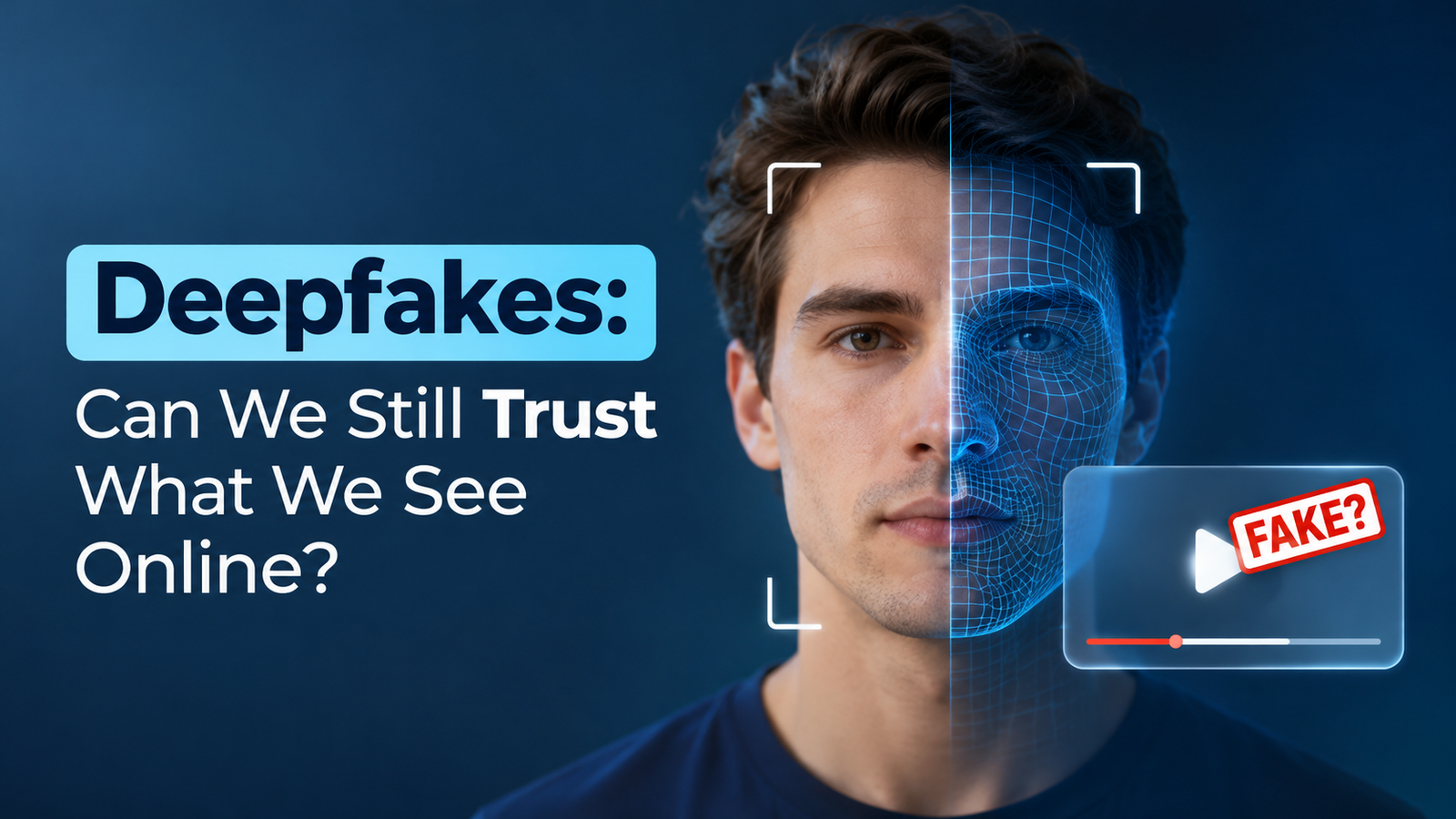
Imagine watching a video of a famous person saying something shocking. The video looks real, the voice sounds familiar, and even the facial expressions seem natural. You might believe it without thinking twice. But what if that person never actually said those words?
This is where deepfake technology comes in.
Deepfakes are changing the way we see and understand content on the internet. With the help of Artificial Intelligence (AI), people can now create fake videos, images, and audio that look and sound very real. Sometimes, it becomes difficult to tell the difference between real and fake content.
While this technology has some useful benefits, it also creates serious problems related to online safety, privacy, and trust.
So, what exactly are deepfakes? How are they created? And most importantly, can we still trust what we see online?
Let’s understand.
What Are Deepfakes?
Deepfakes are fake images, videos, or audio recordings created using Artificial Intelligence. This technology can make one person’s face look like another person’s face, copy someone’s voice, or make someone appear to say things they never said.
For example, someone could take a video of a person speaking and use AI to change their face. The final video may look so real that viewers might think it is genuine.
The word “deepfake” comes from two words: “deep learning” and “fake.” Deep learning is a type of AI that learns from large amounts of information, such as pictures, videos, and voice recordings.
In simple words, deepfake technology studies how a person looks, speaks, and moves. It then uses that information to create fake content that looks similar to the real person.
How Does Deepfake Technology Work?
Creating a deepfake may sound complicated, but the basic idea is simple. AI studies real images, videos, or voice recordings and learns the patterns it needs to create something similar.
For example, if someone wants to create a fake video of a person, an AI tool may study many pictures and videos of that person. It learns their facial expressions, movements, and other details.
After learning these patterns, the AI can place that person’s face into another video or create new expressions.
Some common technologies used to create deepfakes include:
1. Deep Learning
Deep learning helps AI understand patterns from large amounts of data. It allows computers to learn how human faces, voices, and movements work.
2. Face Swapping
Face-swapping technology replaces one person’s face with another person’s face in a picture or video. This is one of the most common uses of deepfake technology.
3. Voice Cloning
Voice cloning uses AI to copy someone’s voice. After learning from voice recordings, the technology can create new speech that sounds like the original person.
4. Generative AI
Generative AI can create new images, videos, and audio based on the information it has learned. It can also help create realistic human faces and scenes that never existed.
Today, many AI tools have made these features easier to access, even for people without technical knowledge.
Why Are Deepfakes Becoming So Popular?
A few years ago, creating realistic fake videos required advanced skills, expensive software, and a lot of time. Today, AI tools have made the process much easier.
Many tools can now create or change faces, generate voices, and edit videos with only a few simple steps.
Social media has also played a major role in making deepfakes popular. People share interesting and unusual videos every day, and realistic AI-generated content can quickly attract attention.
Some other reasons behind their growing popularity include:
- Easy access to AI image and video tools.
- Free or low-cost deepfake applications.
- Better AI technology that creates more realistic results.
- Growing interest in AI-generated entertainment.
- People sharing videos without checking whether they are real.
The biggest concern is that not everyone uses this technology for fun or creative work.
How Are Deepfakes Being Used in Real Life?
Deepfake technology is not always harmful. It can be used in entertainment, education, advertising, and creative projects. However, its misuse is becoming a serious concern.
Here are some common ways deepfakes are being used.
1. Fake Videos of Famous People
AI can create videos showing celebrities, politicians, or business leaders saying things they never said. These videos can spread quickly on social media and confuse viewers.
2. Online Scams and Financial Fraud
Scammers can use AI-generated voices to pretend to be someone’s family member, friend, or company manager. They may ask for money or personal information.
Imagine receiving a voice message from someone who sounds exactly like your family member, asking you to send money urgently. You might believe it without checking.
3. Fake News and Misinformation
Deepfakes can make it look like a public figure has made a controversial statement or taken part in an event that never happened. Such videos can create confusion and influence people’s opinions.
4. Fake Images and Videos Without Permission
Some people use deepfake tools to create harmful or private images of others without their permission. This can damage someone’s reputation, cause emotional stress, and create serious privacy problems.
The FBI has also warned about criminals using manipulated photos and videos to harass people and demand money from victims. Internet Crime Complaint Center+1
How Can You Identify a Deepfake Video?
One of the biggest problems with deepfakes is that they are becoming harder to recognise. Older AI-generated videos often had visible mistakes, but newer tools can create much more realistic results.
Still, there are a few things you can check before believing a video or image.
1. Look Closely at Facial Expressions
Sometimes, a person’s facial movements may not look natural. Their eyes, mouth, or expressions may not match the words they are speaking.
2. Listen to the Voice
Pay attention to the way the person speaks. A fake voice may have unusual pauses, strange pronunciation, or changes in tone.
3. Check the Lighting and Background
Look for unusual shadows, strange skin colours, or objects that appear blurred or distorted. These details may indicate that the video has been edited or generated using AI.
4. Check the Original Source
If you see a shocking video, do not trust it just because it has thousands of views. Check whether trusted news websites or the person’s official social media accounts have shared the same information.
5. Do Not Trust Every AI Detection Tool
Some online tools claim to identify AI-generated images and videos. They can be helpful, but they are not always correct. A result from one detection tool should not be treated as final proof.
The FBI also recommends checking the source and looking for unusual visual or audio details before trusting suspicious content. FBI+1
How Can Deepfakes Affect Our Daily Lives?
Deepfakes are not just a problem for celebrities or famous people. They can affect ordinary internet users too.
For example, someone could use your public social media photos to create fake content. A scammer could also copy your voice and use it to contact people you know.
The impact can include:
- Loss of money: Fake calls and videos can be used to trick people into sending money.
- Damage to reputation: Fake content can make people believe something false about you.
- Privacy problems: Your photos or voice could be used without your permission.
- Fake information: People may believe and share false news.
- Loss of trust: People may start questioning even genuine photos, videos, and recordings.
This last point is especially worrying. When fake content becomes common, people may also start doubting real videos and genuine evidence. U.S. GAO+1
Can Technology Help Us Detect Deepfakes?
Yes, technology can help identify deepfakes. Researchers and companies are working on tools that study images, videos, and audio to find signs of AI manipulation.
Some tools check facial movements, lighting, voice patterns, and other details. Others use digital watermarks or information about where and how a file was created.
Another useful approach is content verification. It helps people understand whether an image or video has been changed and where it originally came from.
However, there is no perfect solution yet. As AI tools improve, fake content also becomes more realistic. Detection tools can make mistakes, so checking the source and context remains important.
A UK government report published in March 2026 also explains that deepfake detection technology is still developing and faces several technical challenges. GOV.UK+1
How Can You Protect Yourself From Deepfake Scams?
You do not need to be a technology expert to stay safe. A few simple habits can help protect you and your family.
- Think twice before sharing shocking videos or news.
- Avoid sending money based only on a voice message or video call.
- If someone asks for urgent help, contact them through another trusted number.
- Keep your personal photos and videos private where possible.
- Do not share passwords, bank details, or personal information with unknown people.
- Report fake or harmful content to the platform where you found it.
If you receive a suspicious call from someone claiming to be a family member, ask a question only that person would know or call them directly using their saved contact number.
These small steps can help reduce the risk of online fraud.
What Does the Future of Deepfake Technology Look Like?
Deepfake technology will probably become even more advanced in the coming years. Creating realistic images, videos, and voices may become faster and easier.
This could bring new opportunities in filmmaking, education, gaming, and advertising. For example, movie makers may use AI to create realistic scenes, while teachers may use digital characters to explain difficult topics.
At the same time, online scams, fake news, and privacy risks may also increase.
Technology companies, governments, and social media platforms will need to work together to make the internet safer. Clear labels for AI-generated content, better reporting systems, and improved detection tools can all help.
The Indian government has also taken steps to address harmful AI-generated content through changes to its IT rules and platform responsibilities in 2026. Press Information Bureau+1
Conclusion: Can We Still Trust What We See Online?
The answer is yes, but we need to be more careful than before.
Deepfake technology is changing the internet. It can be useful for creative work, entertainment, and education, but it can also be misused to spread false information, commit fraud, and harm people’s privacy.
We should not believe every video, image, or voice recording just because it looks real. Before trusting or sharing something, take a moment to check its source and look for reliable information.
The internet is full of useful information, but not everything we see is true. In the age of AI, learning how to question and verify online content is becoming an important skill for everyone.
Frequently Asked Questions (FAQs)
Q1. What is a deepfake in simple words?
Answer:
A deepfake is a fake image, video, or voice recording created using AI. It can make someone appear to say or do something that never actually happened.
Q2. Can deepfake videos be detected?
Answer:
Yes, some deepfake videos can be detected by checking facial movements, voice patterns, lighting, and other details. However, modern deepfakes are becoming harder to identify, and detection tools are not always accurate.
Q3. Are deepfakes dangerous?
Answer:
Deepfakes can be dangerous when used for online scams, fake news, identity misuse, or creating harmful content without permission. They can affect people’s privacy, money, and reputation.
Q4. How can I protect myself from deepfake scams?
Answer:
Avoid trusting suspicious videos or voice messages without checking them. Never send money based only on an urgent call or recording. Verify the person’s identity through another trusted contact method before taking action.