

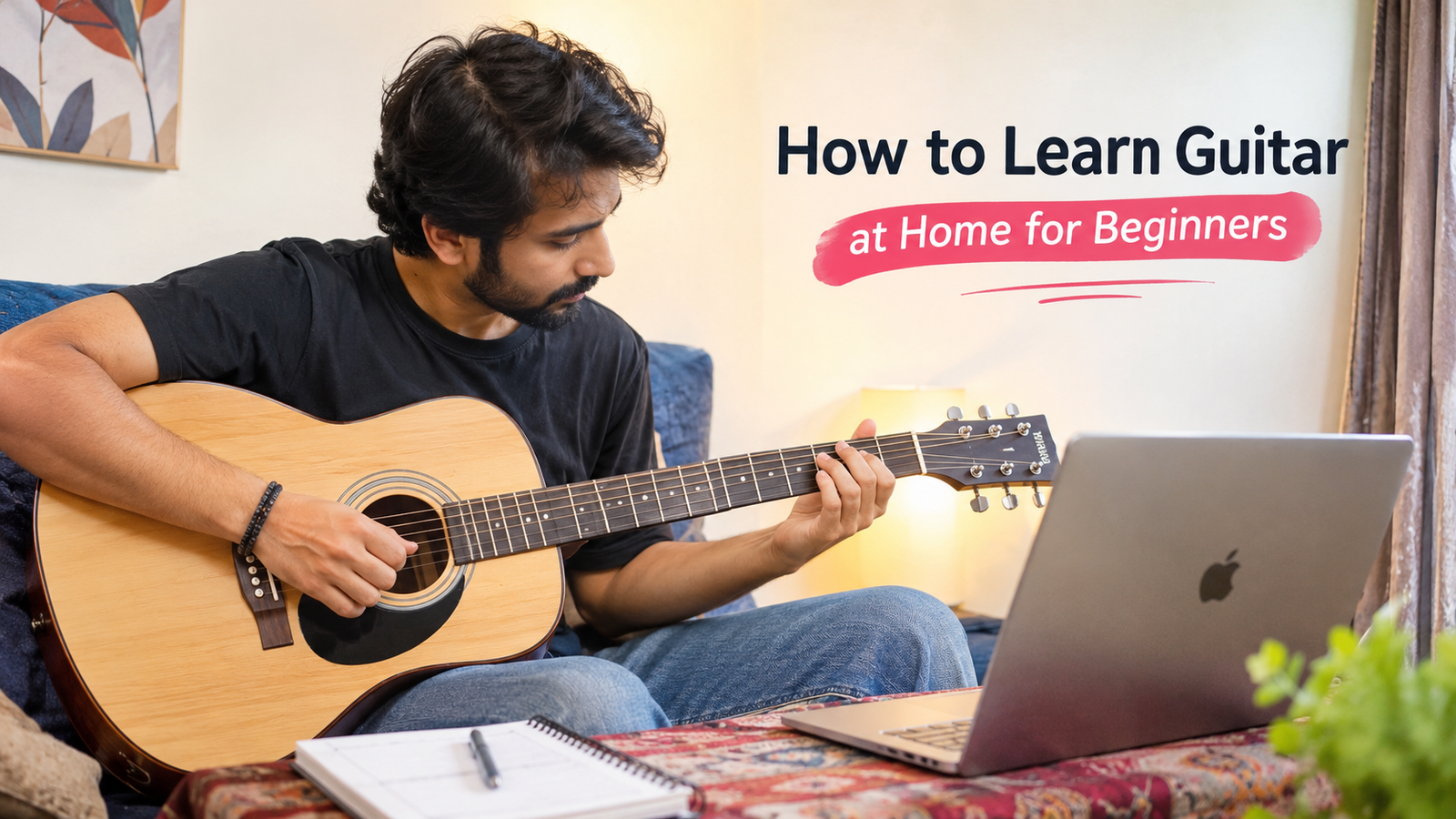
Learning to play the guitar is an exciting journey, especially when you can start from the comfort of your home. Whether you want to play your favourite songs, perform in front of friends, or simply enjoy music as a hobby, learning guitar can be a rewarding experience. The best part is that you do not need to join expensive music classes or have any previous musical experience to get started.
With the right approach, regular practice, and a little patience, beginners can learn guitar at home and gradually develop their playing skills. From understanding the basic parts of a guitar to learning chords, strumming patterns, and simple songs, every step helps build your confidence.
In this guide, you will discover how to learn guitar at home for beginners, what equipment you need, which techniques to practise first, and how to create a simple routine that helps you improve over time.
1. Choose the Right Guitar for Beginners
Before learning your first chord, you need to choose a guitar that feels comfortable to play. There are three common types of guitars: acoustic, classical, and electric. Each has a different sound and playing style, so your choice should depend on the kind of music you enjoy.
An acoustic guitar is a popular choice for beginners because it does not require additional equipment and works well for pop, folk, country, and many other styles. Classical guitars use nylon strings, which are generally softer on the fingers and can be comfortable for new players. Electric guitars have thinner strings and require an amplifier to produce sound, making them suitable for rock, blues, and other modern genres.
When buying your first guitar, consider the following:
- Choose a guitar that feels comfortable to hold.
- Check that the strings are not too far from the fretboard.
- Make sure the guitar stays in tune.
- Select a suitable size based on your height and hand comfort.
- Set a realistic budget without compromising basic build quality.
You do not need an expensive instrument to begin. A comfortable, well-set-up guitar is much more important.
2. Understand the Basic Parts of a Guitar
Understanding the main parts of your guitar will make learning easier. It will also help you follow online lessons and understand common musical instructions.
Some important guitar parts include:
- Headstock: The top section where the tuning pegs are located.
- Tuning pegs: Used to adjust the tension of the strings and change their pitch.
- Neck: The long section you hold while playing chords and notes.
- Fretboard: The surface where you press the strings to produce different notes.
- Frets: Metal strips across the fretboard that divide it into different sections.
- Body: The main part of the guitar that helps produce and amplify sound.
- Bridge: Holds the strings in place on the body.
You should also learn the names of the six guitar strings. From the thickest string to the thinnest, they are E, A, D, G, B, and E. Remembering these names will help you understand chord diagrams, tuning instructions, and beginner guitar exercises.
3. Learn How to Hold the Guitar Correctly
Proper posture is one of the first things beginners should practise. Holding your guitar incorrectly can make playing uncomfortable and affect your ability to move your fingers smoothly.
Sit on a comfortable chair with your back reasonably straight. Rest the guitar body against your body and keep its neck slightly raised. Your fretting hand should move naturally along the neck without unnecessary tension.
If you are right-handed, you will generally use your left hand to press the strings and your right hand to strum or pick them. Left-handed players usually do the opposite.
Keep your shoulders relaxed and avoid gripping the guitar neck too tightly. Good posture helps you practise for longer periods without unnecessary discomfort.
4. Start Learning Basic Guitar Chords
Learning basic chords is one of the most important steps when you begin playing guitar. Chords allow you to play many popular songs without needing advanced musical knowledge.
Start with a few beginner-friendly open chords:
- Em (E minor): One of the easiest chords to learn.
- G major: Commonly used in pop, folk, and acoustic songs.
- C major: A useful chord for developing finger placement.
- D major: Frequently used in beginner song progressions.
- A minor: A simple chord that works well with many others.
When practising chords, place your fingertips close to the metal frets without pressing directly on them. Apply enough pressure to produce a clear sound, but avoid squeezing the neck too tightly.
At first, your fingers may feel uncomfortable, and some strings might produce buzzing sounds. This is normal for beginners. Focus on placing your fingers correctly and practise switching between two chords before trying longer progressions.
5. Practise Basic Strumming Patterns
Once you understand a few chords, the next step is learning how to strum. Strumming gives rhythm to your playing and helps turn individual chords into complete musical arrangements.
Begin with simple downward strums. Hold your pick comfortably between your thumb and index finger, or use your fingers if you prefer fingerstyle playing. Move your wrist gently rather than making large movements with your entire arm.
A simple beginner practice pattern is:
- Down, Down, Down, Down
- Down, Down-Up, Down, Down-Up
- Down-Up, Down-Up, Down-Up, Down-Up
Start slowly and maintain an even rhythm. You can gradually increase your speed as your coordination improves.
Do not worry about playing complicated patterns immediately. Consistent timing and smooth chord changes are more important than speed when you are starting.
6. Learn to Tune Your Guitar
A guitar that is out of tune can make even correctly played chords sound unpleasant. That is why tuning should become part of your daily practice routine.
The standard tuning for a six-string guitar, from the thickest to the thinnest string, is E-A-D-G-B-E.
Beginners can use a digital guitar tuner or a reliable tuning app on their smartphone. These tools help you identify whether a string needs to be tightened or loosened.
Make it a habit to check your tuning before every practice session. You should also understand that new strings can go out of tune more frequently until they settle.
7. Follow a Daily Guitar Practice Routine
You do not need to spend several hours practising every day to improve your guitar skills. Regular practice sessions of 20 to 30 minutes can be a good starting point for beginners.
Instead of practising randomly, divide your time into smaller activities.
A simple daily routine could look like this:
| Practice Activity | Time |
| Finger warm-up exercises | 5 minutes |
| Learning and practising chords | 10 minutes |
| Strumming exercises | 5 minutes |
| Playing a simple song | 10 minutes |
Try to practise at the same time each day. Short, focused sessions are often more useful than occasional long sessions.
As you become more comfortable, increase your practice time and introduce new techniques such as fingerpicking, chord transitions, and simple melodies.
8. Learn Your First Songs on Guitar
Learning songs is one of the most enjoyable ways to stay motivated. Once you know a few basic chords, you can start playing simple songs that use familiar chord progressions.
Choose songs that match your current skill level rather than attempting complicated arrangements too early. Many beginner songs use only three or four basic chords.
You can also search for beginner guitar tutorials on YouTube, where instructors demonstrate chord positions, strumming patterns, and song arrangements.
When learning a song, break it into smaller sections. First practise the chord changes, then work on the strumming pattern, and finally combine everything at a comfortable speed.
Playing songs you genuinely enjoy makes practice feel less like a task and more like an enjoyable hobby.
9. Use Online Resources to Improve Your Guitar Skills
One major advantage of learning guitar at home is the availability of free and paid learning resources. You can access video lessons, chord charts, interactive tutorials, and practice exercises without attending physical classes.
Some useful platforms include:
- YouTube: Offers free beginner lessons, chord tutorials, and complete song demonstrations.
- JustinGuitar: Provides structured guitar lessons for beginners and more advanced players.
- Fender Play: Offers guided lessons and courses for different guitar styles.
- Ultimate Guitar: Provides chord charts, tabs, and song tutorials.
Choose one main learning resource and follow its lessons consistently. Switching between too many tutorials can sometimes create confusion, especially when different instructors teach techniques in different ways.
10. Common Mistakes Beginners Should Avoid
Learning guitar takes time, and making mistakes is part of the process. However, avoiding a few common habits can make your progress smoother.
Some mistakes to watch out for include:
- Trying to play too fast before mastering basic techniques.
- Skipping regular practice sessions.
- Pressing strings too hard and creating unnecessary finger tension.
- Ignoring guitar tuning.
- Learning too many chords without practising transitions.
- Giving up because your fingers feel uncomfortable during the first few weeks.
Remember that progress does not always happen immediately. Focus on improving one small skill at a time rather than comparing your playing with experienced guitarists.
Conclusion
Learning guitar at home for beginners is entirely possible with the right instrument, basic guidance, and consistent practice. You do not need expensive lessons or professional musical experience to get started. Begin by understanding your guitar, learning basic chords, practising simple strumming patterns, and gradually moving towards complete songs.
The key is to stay patient and make practice a regular part of your routine. Even 20 to 30 minutes of focused practice each day can help you build confidence and improve your playing skills over time. Start with simple goals, enjoy the learning process, and remember that every experienced guitarist was once a beginner.
Frequently Asked Questions (FAQs)
Q1. Can I learn guitar at home without a teacher?
Answer:
Yes, you can learn guitar at home without a personal teacher. Online tutorials, guitar learning apps, chord charts, and structured video lessons provide plenty of guidance for beginners. However, regular practice and paying attention to proper technique are important for making steady progress.
Q2. How long does it take to learn guitar for beginners?
Answer:
Most beginners can learn a few basic chords and simple songs within a few weeks of regular practice. Becoming comfortable with chord changes, strumming patterns, and more advanced techniques can take several months. Your progress depends on your practice routine, learning approach, and consistency.
Q3. How many hours should a beginner practise guitar daily?
Answer:
Beginners can start with 20 to 30 minutes of focused practice each day. Spend time learning chords, practising finger movements, improving strumming, and playing simple songs. Consistent daily practice is generally more helpful than practising for several hours only once or twice a week.
Q4. Which guitar is best for beginners?
Answer:
An acoustic guitar is a popular option for beginners because it is versatile and does not require an amplifier. A classical guitar with nylon strings can also be a comfortable choice because its strings are generally softer on the fingers. The best option depends on your musical interests, comfort, and budget.