

Astronauts living and working in space may be hundreds or thousands of kilometres away from Earth, yet they can talk to mission control, receive instructions, send scientific data, and even make video calls. This communication is essential for their safety and for the success of space missions.
But how does a voice travel from a spacecraft to Earth when there is no air in space to carry sound? How can astronauts send live video from the International Space Station, and what happens when a spacecraft travels so far away that radio signals take several minutes to arrive?
The answer lies in radio waves, powerful antennas, communication satellites, and large ground stations. These technologies work together to connect astronauts with scientists, engineers, and other team members on Earth.
In this article, we will explore how space communication works, which technologies make it possible, and why staying connected becomes more difficult as astronauts travel farther into space.
Why Is Communication Important for Astronauts?
Communication is much more than a way for astronauts to talk to their families. It is a vital part of almost every space mission. Astronauts need to exchange information with mission control teams to coordinate activities, monitor spacecraft systems, solve technical problems, and receive important instructions.
For example, astronauts aboard the International Space Station (ISS) regularly communicate with teams on Earth while conducting scientific experiments, maintaining equipment, and preparing for spacewalks. Ground teams can help them understand experiment procedures, troubleshoot equipment, and respond to unexpected situations.
Communication also allows mission control to receive information about an astronaut’s environment, including spacecraft conditions and equipment performance. This information helps teams assess risks and make informed decisions.
Without reliable communication, astronauts would have to operate with much less support from Earth. Even a short interruption can make some activities more difficult, especially when a mission requires close coordination between the crew and ground teams.
How Do Astronauts Communicate With Earth?
Astronauts primarily use radio communication systems to exchange information with Earth. These systems convert voice, video, and digital information into signals that can travel through space as electromagnetic waves.
Unlike sound waves, radio waves do not need air or another material to travel. They can move through the vacuum of space at the speed of light, making them suitable for communication between spacecraft and Earth.
The communication process generally follows these steps:
- An astronaut speaks into a microphone or uses a computer to send information.
- The spacecraft’s communication equipment converts the information into an electronic signal and transmits it using a radio antenna.
- The radio signal travels through space toward a receiving antenna on a communication satellite or a ground station, depending on the system being used.
- Ground equipment processes the signal and sends the recovered voice or data to mission control.
- When mission control replies, the process works in the opposite direction, sending information back to the spacecraft.
This exchange happens quickly when astronauts are close to Earth. However, the distance between the spacecraft and Earth becomes a major factor during missions to the Moon, Mars, and other destinations.
What Technology Allows Astronauts to Talk to Earth?
Several technologies work together to make space communication possible. Each has a specific role, from capturing an astronaut’s voice to receiving weak signals from millions of kilometres away.
1. Radio Waves
Radio waves are the foundation of most astronaut communication systems. They are a type of electromagnetic radiation, similar in basic nature to visible light, but with much longer wavelengths.
When an astronaut speaks, a microphone converts their voice into an electrical signal. Communication equipment encodes that information and uses it to modulate a radio signal. An antenna then transmits the signal into space.
A receiving antenna collects the incoming radio waves, and electronic equipment decodes the signal to reproduce the original voice or data.
Radio communication can carry different kinds of information, including:
- Voice conversations between astronauts and mission control
- Video and images from spacecraft cameras
- Scientific measurements collected during experiments
- Spacecraft health information and engineering data
- Instructions and software updates sent from Earth
The radio frequencies and communication methods used depend on the spacecraft, mission distance, antenna design, and amount of information that needs to be transmitted.
2. Communication Antennas
Antennas send and receive radio signals. Spacecraft use different types of antennas depending on their communication requirements.
Some antennas provide coverage over a wide area, which is useful when a spacecraft changes orientation or needs to maintain a general communication link. Others focus radio energy in a narrower direction to communicate over longer distances or transmit larger amounts of data.
A high-gain antenna, for example, directs signals toward a particular receiving location. This concentrated signal can improve communication performance over long distances, although the antenna generally needs to be pointed accurately.
Ground stations also use antennas to receive signals from spacecraft. Some deep-space facilities have very large dish antennas designed to collect extremely weak signals arriving from distant missions.
Maintaining the communication link requires careful coordination between the transmitting and receiving equipment. Spacecraft movement, antenna direction, signal strength, and the position of Earth can all affect the connection.
3. Communication Satellites
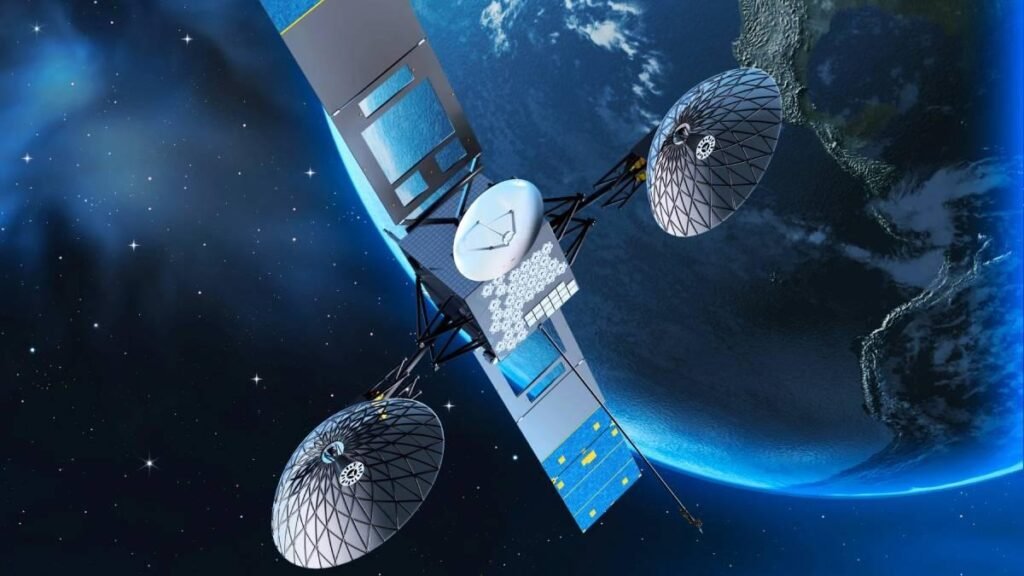
Communication satellites act as relay stations between spacecraft and Earth. They are especially useful for astronauts aboard spacecraft that orbit relatively close to our planet.
The International Space Station travels around Earth at high speed. If it relied only on direct communication with ground stations, it would lose contact whenever Earth blocked the signal or the station moved beyond a ground antenna’s range.
To reduce these interruptions, NASA uses a network that includes Tracking and Data Relay Satellites, commonly known as TDRS. These satellites operate in high orbits and relay signals between the space station and ground facilities. The information can then travel through terrestrial communication links to mission control.
The process works in both directions. Astronauts can send voice messages, video, and scientific information to Earth, while mission control can transmit instructions and other data back to the station.
This system makes communication much more reliable than depending on a single ground antenna. It is one of the reasons astronauts aboard the ISS can maintain near-continuous contact with teams on Earth.
4. Ground Stations on Earth
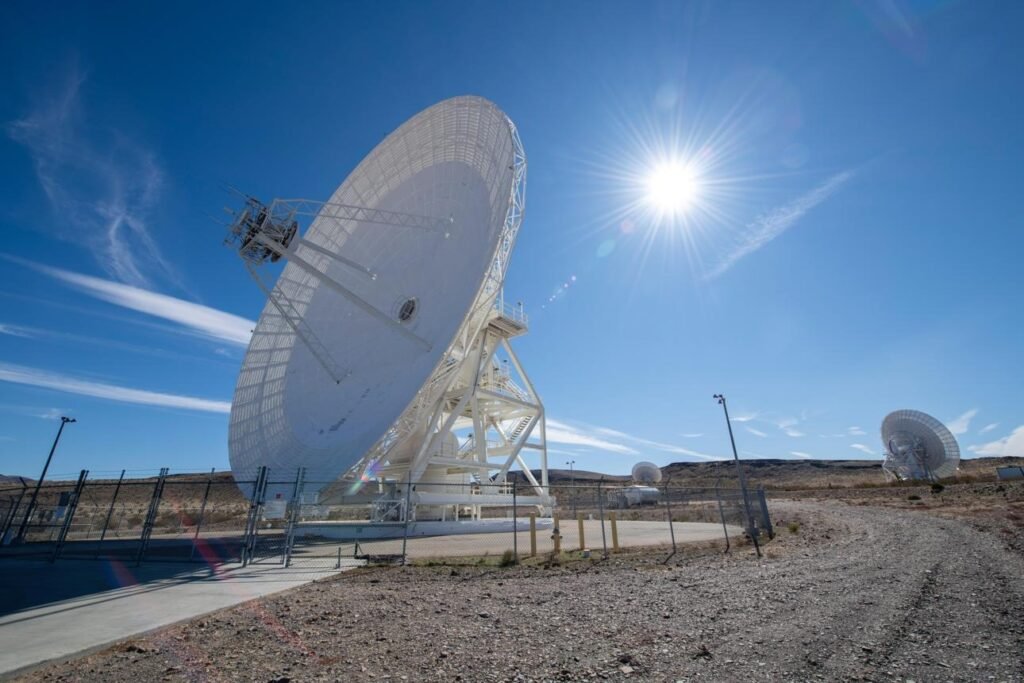
Although spacecraft carry antennas, the communication system on Earth is just as important. Ground stations receive radio signals from space, transmit commands, and help determine where spacecraft are located.
These stations often have large dish-shaped antennas that can be pointed precisely toward a spacecraft. Their sensitive receivers are designed to detect weak signals that have travelled enormous distances.
NASA operates the Deep Space Network (DSN), an international system of large antennas at three main locations:
- Goldstone, California, in the United States
- Madrid, SpainCanberra, Australia
These facilities are spread around the world so that as Earth rotates, another station can take over communication with a distant spacecraft. The network supports spacecraft exploring the Moon, planets, and other parts of the solar system.
Ground stations do more than receive messages. They also send commands to spacecraft, collect scientific measurements, and help engineers track a mission’s progress.
The signals may be extremely weak by the time they reach Earth. Sensitive equipment, carefully aimed antennas, and sophisticated signal processing help recover the information.
How Do Astronauts Make Video Calls From Space?
Astronauts can make video calls because video, like voice, can be converted into digital data and transmitted using communication systems.
A camera records the astronaut’s image, while a microphone captures their voice. The equipment converts this information into digital data, which is transmitted through the spacecraft’s communication link. On Earth, the data is routed to the appropriate destination and converted back into video and audio.
For astronauts aboard the ISS, communication satellites help relay information to ground facilities. From there, terrestrial networks can deliver it to mission control or other connected locations.
However, a video call from space is not always identical to a video call on Earth. The quality depends on available bandwidth, signal strength, network capacity, and the amount of data being transmitted.
Scientific images and video can require much more bandwidth than a simple voice conversation. For that reason, communication systems must carefully manage the information being sent.
Astronauts may also experience delays, brief interruptions, or lower video quality depending on the mission and communication conditions. A live connection is possible, but it still depends on a complex network of equipment operating correctly.
How Do Astronauts Communicate Inside Their Spacecraft?
Astronauts need to communicate with one another just as reliably as they communicate with Earth. Their onboard communication systems allow them to coordinate routine activities, monitor procedures, and respond to emergencies.
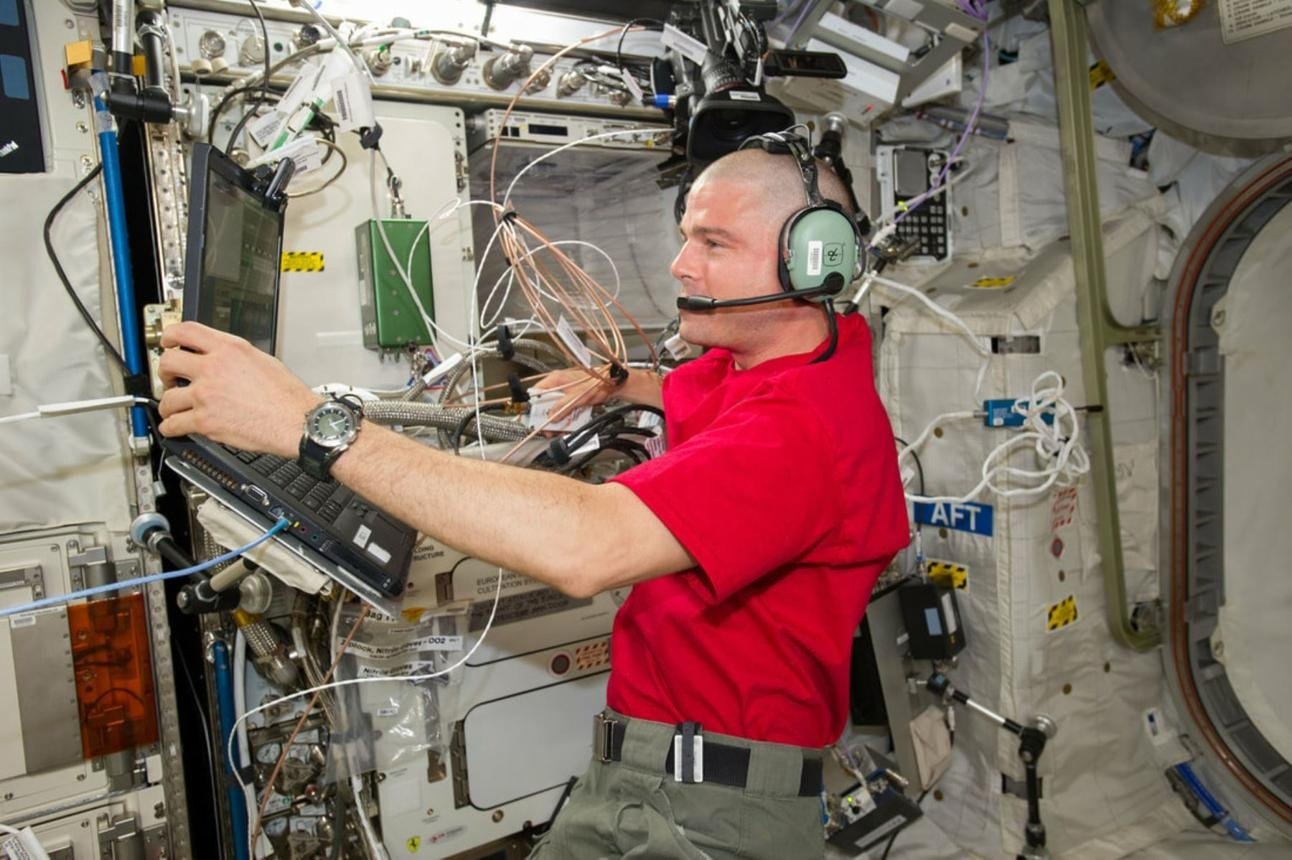
Inside a spacecraft, astronauts may use headsets, microphones, speakers, and built-in communication equipment. These systems transmit voices between crew members and connect the crew to mission control when an external communication link is available.
During a spacewalk, communication becomes especially important. Astronauts wear spacesuits equipped with microphones and audio systems, allowing them to talk with each other and ground controllers while working outside the spacecraft.
The communication equipment helps astronauts coordinate movements, receive instructions, and report changes in their surroundings. Mission control can also provide guidance if an unexpected problem occurs.
Depending on the spacecraft and mission, communication systems may include backup equipment to help maintain contact if a primary component fails.
How Do Astronauts Communicate During a Spacewalk?
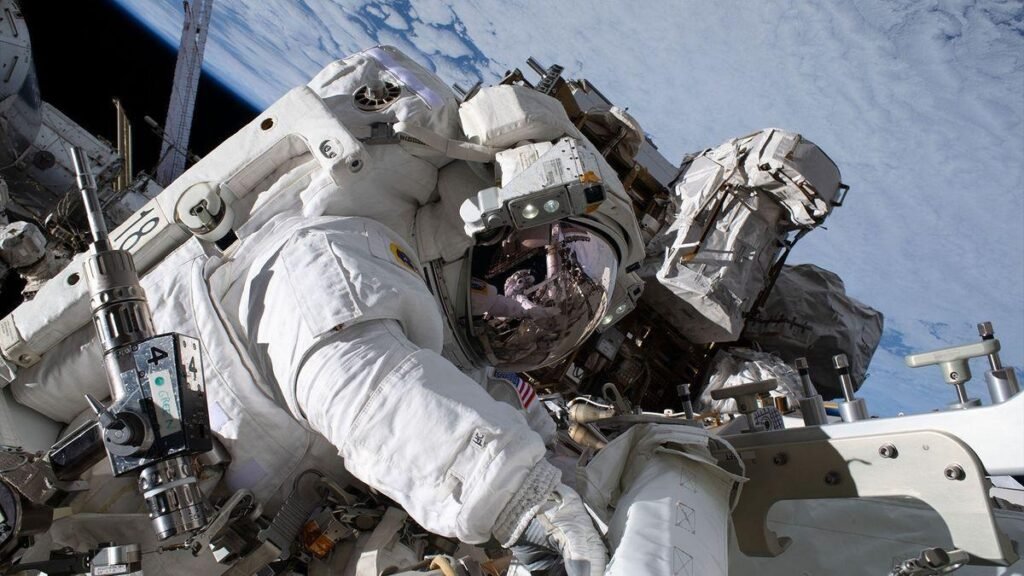
A spacewalk places an astronaut outside a spacecraft, exposed to the vacuum of space. Since sound cannot travel through the vacuum, astronauts cannot simply speak into the surrounding space and expect another person to hear them.
Instead, their voices travel through communication equipment built into their spacesuits.
The microphone captures the astronaut’s voice, and the communication system sends it to other crew members or mission control through radio links. Audio equipment inside the helmet allows the astronaut to hear replies.
During a spacewalk, astronauts and ground controllers can exchange instructions and updates about the task. This helps them coordinate equipment installation, maintenance, inspections, and other activities.
Communication is particularly important because spacewalks involve several risks, including limited mobility, complex equipment, and the need to manage oxygen and other life-support resources.
The ability to maintain contact helps the astronaut work as part of a coordinated team rather than having to make every decision alone.
How Long Does It Take for a Message to Travel From Space to Earth?
The time required for a message to reach Earth depends mainly on the distance between the spacecraft and our planet. Radio waves travel at approximately 300,000 kilometres per second in a vacuum, which is the speed of light.
For astronauts aboard the International Space Station, the travel time of a radio signal is extremely short because the station orbits only a few hundred kilometres above Earth. The overall communication system introduces some additional processing and routing time, but conversations can generally take place with little noticeable delay.
The situation changes when astronauts travel much farther away.
| Destination | Approximate one-way signal travel time |
| International Space Station | A few milliseconds for the direct space-to-Earth path |
| Moon | About 1.3 seconds |
| Mars | Roughly 3 to 22 minutes, depending on the distance between Earth and Mars |
These figures describe the approximate time for a signal to travel one way, not the time for a complete question-and-answer exchange.
For example, if a spacecraft near Mars sends a message to Earth, the signal might take several minutes to arrive. If mission control then replies, that response will take several more minutes to return.
This is why real-time conversations become impractical for missions to Mars. Astronauts travelling there would need to work more independently, following plans and procedures prepared in advance while waiting for guidance from Earth when necessary.
Why Is Communication More Difficult in Deep Space?
Communication becomes more challenging as spacecraft travel farther from Earth. Distance weakens the received signal, increases the time required for messages to arrive, and creates additional demands on communication equipment.
Several factors affect deep-space communication.
Weak Radio Signals
As a radio signal travels outward, its energy spreads over a larger area. Only a small portion may reach a receiving antenna on Earth, particularly when the spacecraft is extremely distant.
Engineers compensate by using carefully aimed antennas, powerful transmitters within spacecraft limits, sensitive receivers, and advanced signal-processing techniques. Large ground antennas are especially important for receiving signals from distant spacecraft.
Communication Delays
A distant spacecraft cannot receive an immediate response from Earth because information cannot travel faster than light. Mission teams must account for this delay when planning activities and responding to problems.
For future human missions to Mars, this means astronauts will need strong onboard procedures, reliable automated systems, and the ability to make decisions without waiting for mission control.
Limited Bandwidth
Bandwidth determines how much information a communication system can carry over a given period. A spacecraft may have enough capacity to send essential commands and measurements but not enough to transmit every image or video at full quality immediately.
Mission teams therefore prioritise important information. Some data may be compressed, sent in stages, or stored onboard until a suitable communication opportunity becomes available.
Obstacles and Signal Interruptions
Communication can also be interrupted when a planet or another large object blocks the direct path between a spacecraft and Earth. Spacecraft may also experience planned communication gaps, equipment limitations, or changing antenna visibility.
Engineers plan around these conditions by scheduling transmissions, using relay spacecraft where available, and designing systems that can store data until communication is restored.
How Will Astronauts Communicate With Earth on Future Space Missions?
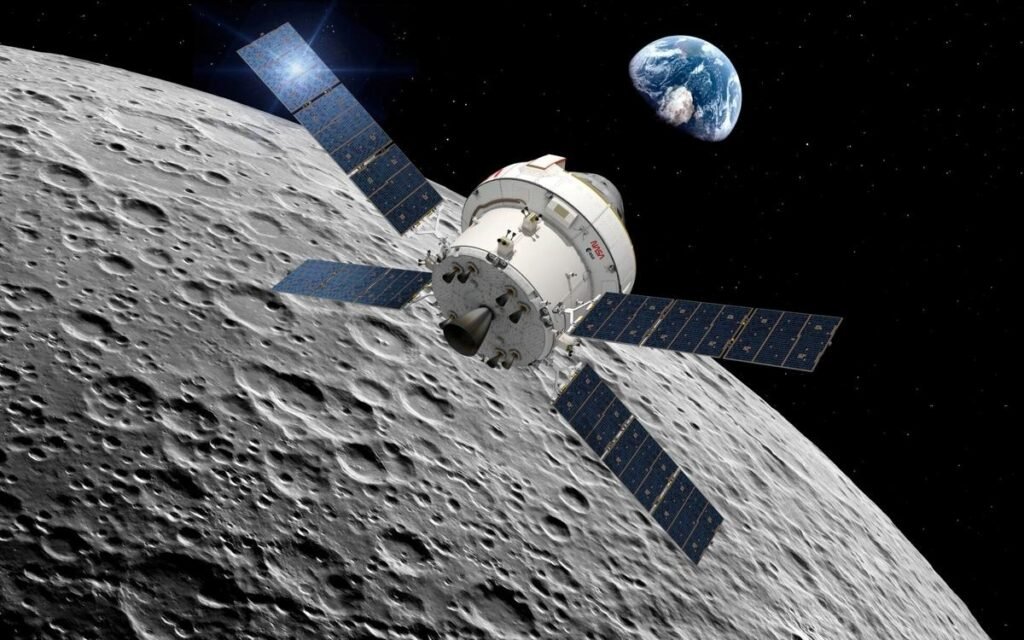
Future missions to the Moon and Mars will require communication systems that are more capable, flexible, and reliable than ever before.
NASA’s Artemis missions, for example, rely on space communication networks to carry astronaut voice, video, images, and spacecraft data during lunar journeys. As missions move beyond low Earth orbit, communication planners must combine different networks and ground facilities to maintain contact
Several technologies could improve communication during future missions.
Laser Communication
Traditional space communication mainly uses radio waves. Laser communication instead uses tightly focused beams of light to transmit information.
Because laser systems can support high data rates, they offer the potential to send large amounts of scientific information, images, and video more efficiently. However, the narrow beam must be aimed with great precision, and atmospheric conditions can affect links that pass through Earth’s atmosphere.
NASA has been testing optical communication technologies to help future missions transmit more data over long distances.
Better Communication Networks Around the Moon
Future lunar exploration could benefit from communication satellites positioned around the Moon or in suitable lunar orbits. These systems could relay signals between astronauts, spacecraft, surface equipment, and Earth.
A relay network would be particularly useful when astronauts work on the far side of the Moon, where the lunar surface blocks a direct radio path to Earth.
More Autonomous Communication Systems
As astronauts travel farther from Earth, communication delays will make constant guidance from mission control less practical. Future spacecraft may rely more heavily on onboard computers to manage communication schedules, prioritise urgent information, detect link problems, and restore connections when possible.
These systems would not eliminate the need for human mission controllers. Instead, they could help crews remain productive and safe when immediate contact is unavailable.
Overall, future space communication will likely combine radio systems, optical links, relay satellites, and more autonomous onboard technology.
Can Astronauts Use the Internet in Space?
Yes, astronauts can access internet-based services in space, although the experience depends on the spacecraft, available network connections, and mission rules.
Aboard the International Space Station, communication links allow astronauts to access selected online services, exchange emails, participate in video calls, and communicate with people on Earth. The connection relies on specialised space communication infrastructure rather than a conventional home internet connection.
The process is similar to using the internet on Earth. A device sends digital information through a network, the information travels to its destination, and a response comes back through the communication link.
However, astronauts do not necessarily have unrestricted access to every online service. Available bandwidth, security requirements, operational priorities, and mission policies can limit what they can access.
Deep-space missions will face additional challenges because of the long signal travel times. Even when a spacecraft has a working connection, the distance can make browsing, video calls, and interactive services much slower than they are on Earth.
What Happens If Astronauts Lose Communication With Earth?
Losing contact with Earth does not automatically mean astronauts are in immediate danger. Spacecraft and space stations are designed with procedures for dealing with communication interruptions.
If a communication link fails, mission controllers and astronauts follow established procedures to identify the problem and restore contact. Engineers may investigate antenna alignment, equipment performance, signal interference, or the spacecraft’s position relative to available communication stations.
During a temporary interruption, astronauts can continue routine activities according to their mission plans. They can also rely on onboard procedures and emergency checklists when necessary.
Spacecraft may have backup communication equipment or alternative communication paths, depending on their design. Critical spacecraft information can also be stored onboard until a connection becomes available again.
For a mission far from Earth, communication planning is especially important. Astronauts must be trained to handle certain problems independently because immediate assistance from mission control may not be possible.
This is one reason communication systems are tested extensively before a mission begins. Reliable contact, backup equipment, and clear emergency procedures all contribute to crew safety.
Conclusion
Astronauts communicate with Earth through a combination of radio waves, antennas, communication satellites, and ground stations. These technologies allow them to speak with mission control, send scientific data, share video, and receive instructions while travelling through space.
For astronauts aboard the International Space Station, relay satellites help provide near-continuous communication with Earth. For missions to the Moon and beyond, specialised networks such as NASA’s Deep Space Network help maintain contact across much greater distances.
However, space communication is not without challenges. Signals become weaker over long distances, planets can block communication paths, and the speed of light creates unavoidable delays. Future missions will need more advanced communication networks, laser technology, and onboard systems that help astronauts work independently.
As humans prepare to explore the Moon and eventually Mars, reliable communication will remain one of the most important technologies supporting safe and successful space exploration.
Frequently Asked Questions
Q1. How do astronauts communicate with Earth from space?
Answer: Astronauts mainly use radio waves to communicate with Earth. Their spacecraft transmit voice, video, and digital information through antennas, often using communication satellites to relay the signals to ground stations and mission control.
Q2. Can astronauts talk to their families while in space?
Answer: Yes, astronauts can communicate with their families through available communication services, including voice or video calls. The exact options depend on the spacecraft, network availability, and mission policies.
Q3. Why is there a delay in communication between Earth and Mars?
Answer: Radio signals travel at the speed of light, but Mars is extremely far from Earth. Depending on the planets’ positions, a signal can take approximately 3 to 22 minutes to travel one way, making an immediate conversation impossible.
Q4. Can astronauts communicate with Earth if their spacecraft loses its internet connection?
Answer: Yes, losing an internet connection does not necessarily mean all communication has stopped. Spacecraft may have separate radio communication systems, backup equipment, and established procedures for restoring contact, depending on their design.