

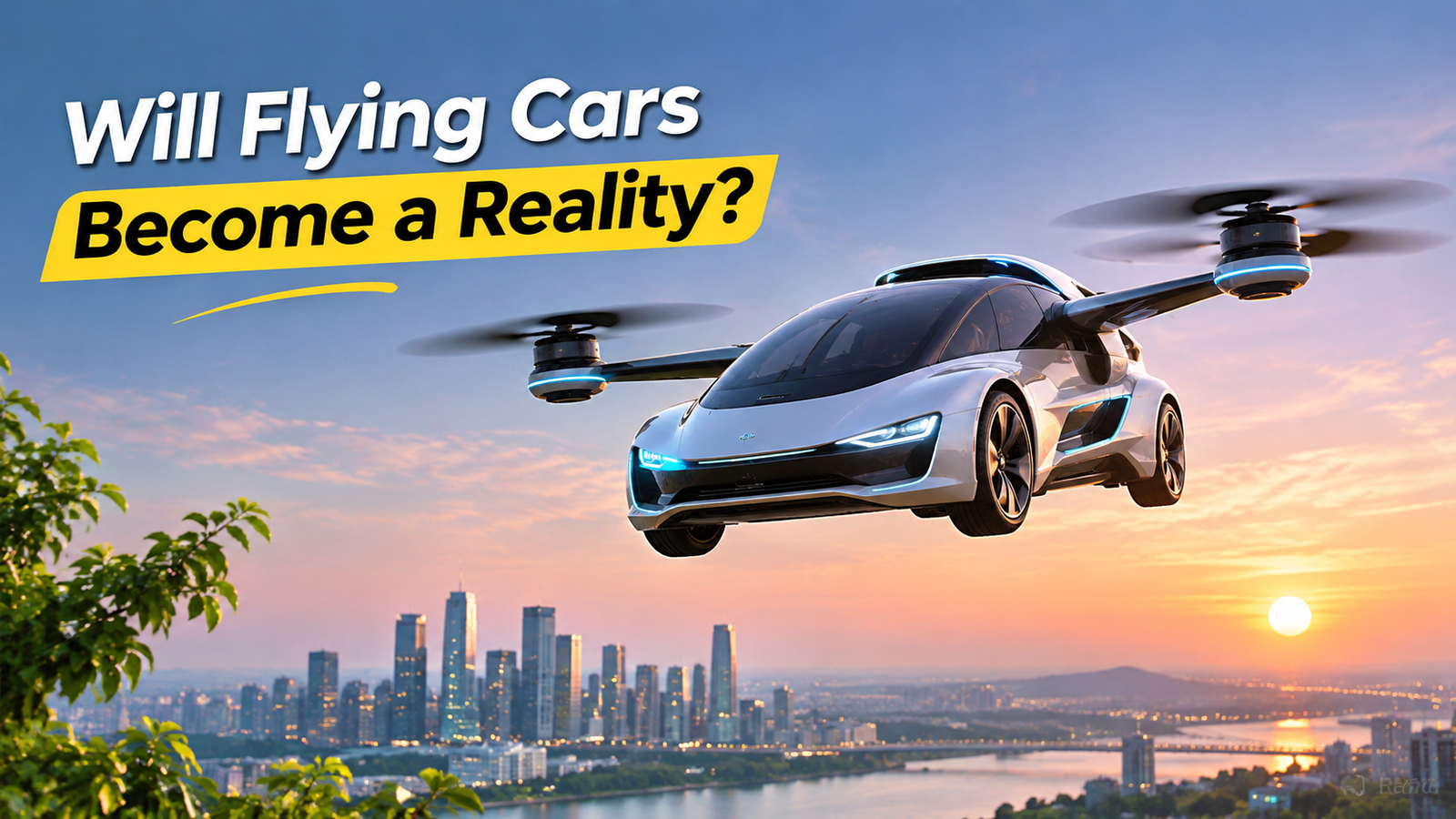
Imagine leaving your home, getting into a vehicle, and reaching your destination through the air instead of sitting in traffic for hours. What once seemed like a scene from a science fiction movie is slowly becoming a serious area of development in the automotive and aviation industries. Flying cars are no longer just an idea for the distant future. Companies around the world are developing vehicles designed to take off, fly, and land with minimal human involvement.
But an important question remains: will flying cars actually become a normal part of everyday transportation, or will they remain expensive technology available to only a few people? To understand their potential, it is important to explore how they work, the technology behind them, their benefits, and the challenges that still need to be addressed.
What Are Flying Cars?
Flying cars are vehicles designed to travel both on roads and through the air, although not every vehicle described as a flying car can perform both functions. Some models are designed to operate like traditional cars on the ground before transforming into aircraft, while others are built specifically for short-distance air travel.
A major development in this field is the electric vertical take-off and landing vehicle, commonly known as eVTOL. Unlike traditional aircraft, eVTOL vehicles can take off and land vertically without requiring a long runway. This makes them suitable for urban environments where available space is limited.
Many modern designs use multiple electric motors and propellers to lift the vehicle into the air. Some look like compact helicopters, while others resemble small futuristic aircraft with wings and enclosed passenger cabins.
How Does Flying Car Technology Work?
Flying cars combine several technologies from the automotive, aerospace, and electronics industries. Their operation depends on advanced systems that help them take off, remain stable in the air, navigate, and land safely.
1. Electric Propulsion Systems
Electric propulsion is one of the most important technologies behind modern flying vehicles. Instead of relying entirely on conventional fuel-powered engines, many eVTOL designs use electric motors connected to multiple propellers.
These motors generate the force needed to lift the vehicle and keep it moving through the air. Electric propulsion can also reduce local emissions and mechanical complexity compared with some traditional aircraft systems.
2. Vertical Take-Off and Landing Technology
Traditional airplanes need runways to build enough speed before taking off. Flying vehicles using VTOL technology do not have this requirement. They use powerful rotors or propellers to lift directly from the ground.
This feature could make it possible to operate flying vehicles from specially designed rooftops, parking facilities, and urban landing areas.
3. Artificial Intelligence and Autonomous Navigation
Artificial intelligence is expected to play an important role in the development of flying cars. Advanced navigation systems can process information from cameras, sensors, GPS, and other onboard equipment.
These systems help vehicles understand their surroundings, identify obstacles, maintain flight paths, and respond to changing conditions. Some developers are also working on autonomous flight capabilities that could reduce the need for continuous manual control.
4. Lightweight Materials and Battery Technology
Weight is a major concern in aviation because heavier vehicles generally require more energy to fly. Manufacturers are exploring lightweight materials such as carbon fibre composites and advanced aluminium structures to improve efficiency.
Battery technology is equally important. Flying vehicles need enough stored energy to carry passengers, complete their journeys, and maintain a safe reserve for unexpected situations.
Are Flying Cars Already Being Developed?
Yes, several companies are actively developing flying vehicles, and some have moved beyond the concept stage into prototype testing and certification programmes.
A few notable examples include:
Alef Aeronautics
Alef Aeronautics is developing the Model A, a vehicle designed to combine road travel with vertical flight capabilities. Its concept focuses on allowing users to drive on roads and take off when necessary. However, commercial availability and regulatory approval remain important milestones.
Joby Aviation
Joby Aviation is developing an electric air taxi designed for short-distance passenger transportation. Its aircraft uses multiple electric propellers and is intended to provide quieter urban and regional air travel.
Archer Aviation
Archer Aviation is another company working on electric aircraft for urban transportation. Its Midnight aircraft is designed to carry a pilot and passengers on relatively short journeys, with the goal of reducing travel time in busy cities.
XPENG AeroHT
XPENG AeroHT, associated with Chinese automotive technology company XPENG, is developing flying vehicle concepts, including a modular flying car system. Its approach combines a road-going vehicle with a separate electric aircraft component.
These projects show that flying transportation is moving towards practical applications. However, developing a prototype does not automatically mean that a vehicle is ready for widespread public use.
Benefits of Flying Cars in the Future
If flying cars become commercially practical, they could change how people travel, especially in crowded urban areas.
One of the biggest potential advantages is reduced travel time. People who regularly spend hours commuting could eventually use short-distance air transportation to reach business districts, airports, or nearby cities more quickly.
Another benefit is the possibility of reducing pressure on existing road networks. Although flying vehicles would not eliminate road traffic, moving some journeys into the air could create additional transportation options.
Flying vehicles may also offer advantages in emergency situations. Specially designed aircraft could help transport medical supplies, support emergency response teams, and reach locations that are difficult to access by road.
Other potential benefits include:
- Faster urban transportation: Short-distance journeys could become more convenient.
- Reduced local emissions: Electric flying vehicles do not produce exhaust emissions during operation.
- Improved emergency access: Specialised aircraft could support medical and rescue operations.
- New transportation opportunities: Cities could develop dedicated aerial mobility services.
However, these benefits depend on how efficiently the vehicles operate and how their supporting infrastructure is developed.
Major Challenges Preventing Flying Cars From Becoming Common
Despite technological progress, several challenges must be solved before flying cars become a regular transportation option.
1. High Manufacturing and Operating Costs
Developing aircraft requires advanced engineering, testing, and specialised components. Batteries, flight control systems, sensors, and safety equipment can make these vehicles expensive to manufacture.
Even after production increases, maintenance, insurance, and operating costs could make flying cars unaffordable for many people.
2. Battery Range and Charging Limitations
Battery performance remains one of the biggest challenges for electric aviation. Flying requires considerable energy, particularly during take-off and landing.
Manufacturers must improve battery energy density, charging speed, and overall efficiency before electric flying vehicles can support longer journeys and frequent daily operations.
3. Safety and Reliability
A technical failure in a road vehicle and a technical failure in an aircraft can have very different consequences. Flying cars must maintain high safety standards because they operate above buildings, roads, and populated areas.
Manufacturers need reliable backup systems, effective emergency landing procedures, and advanced obstacle detection technology.
4. Air Traffic Management
Imagine hundreds of flying vehicles operating above a busy city at the same time. Without proper coordination, the risk of collisions and disruptions could increase significantly.
Cities will need advanced air traffic management systems to organise flight routes, control vehicle movements, and monitor aerial traffic.
5. Government Regulations and Infrastructure
Flying vehicles must meet aviation safety requirements and comply with local transportation regulations. Governments also need to establish rules covering pilot qualifications, flight permissions, insurance, and landing locations.
Dedicated landing and charging facilities, often called vertiports, will also be necessary for commercial operations.
Will Flying Cars Replace Traditional Cars?
Flying cars are unlikely to replace traditional cars completely, at least in the foreseeable future. Road vehicles remain more practical for everyday journeys, shopping, short commutes, and travel through areas where flying infrastructure is unavailable.
Instead, flying vehicles are more likely to become an additional transportation option. They could initially serve specific purposes, such as airport transfers, premium urban air taxis, emergency services, and transportation between nearby cities.
Their adoption will depend on affordability, safety, convenience, and public acceptance. Just as electric vehicles gradually entered the mainstream, flying transportation may also develop through specialised services before becoming more widely accessible.
When Will Flying Cars Become Available to the Public?
There is no confirmed date when flying cars will become a normal part of everyday life. Some electric aircraft developers are already working towards commercial air taxi services, while road-capable flying car projects continue to face engineering and regulatory challenges.
During the coming years, urban air mobility services may become more visible in selected markets. However, widespread private ownership will probably take longer because it requires affordable technology, charging facilities, suitable landing areas, and clear aviation regulations.
The transition will likely happen gradually rather than overnight. Early services may operate along fixed routes between airports, business districts, and other major destinations.
Conclusion
Flying cars represent an exciting development in the future of transportation. Advances in electric propulsion, artificial intelligence, lightweight materials, and autonomous navigation are making aerial mobility more practical than it once seemed.
However, technology alone will not determine their success. Battery limitations, manufacturing costs, safety requirements, infrastructure, and government regulations must also be addressed.
Flying cars may not replace traditional vehicles, but they could become an important part of future transportation systems. For now, they remain a developing technology with significant potential. The idea of travelling above traffic may still sound futuristic, but the foundations for making it possible are already being built.
Frequently Asked Questions
Q1. Will flying cars become available to the general public?
Answer: Yes, flying cars may eventually become available to the general public, but widespread access will depend on manufacturing costs, safety standards, government regulations, and the development of suitable infrastructure.
Q2. How do flying cars take off and land?
Answer: Many modern flying vehicles use vertical take-off and landing technology. Electric motors power multiple propellers or rotors that generate enough lift to take off and land without using a traditional runway.
Q3. Are flying cars environmentally friendly?
Answer: Electric flying vehicles do not produce exhaust emissions during operation. However, their overall environmental impact also depends on battery manufacturing, electricity sources, energy consumption, and the materials used to build them.
Q4. What is the biggest challenge in developing flying cars?
Answer: Some of the biggest challenges include battery limitations, high development costs, passenger safety, air traffic management, and government regulations. Solving these issues is essential before flying cars can become a practical transportation option.