

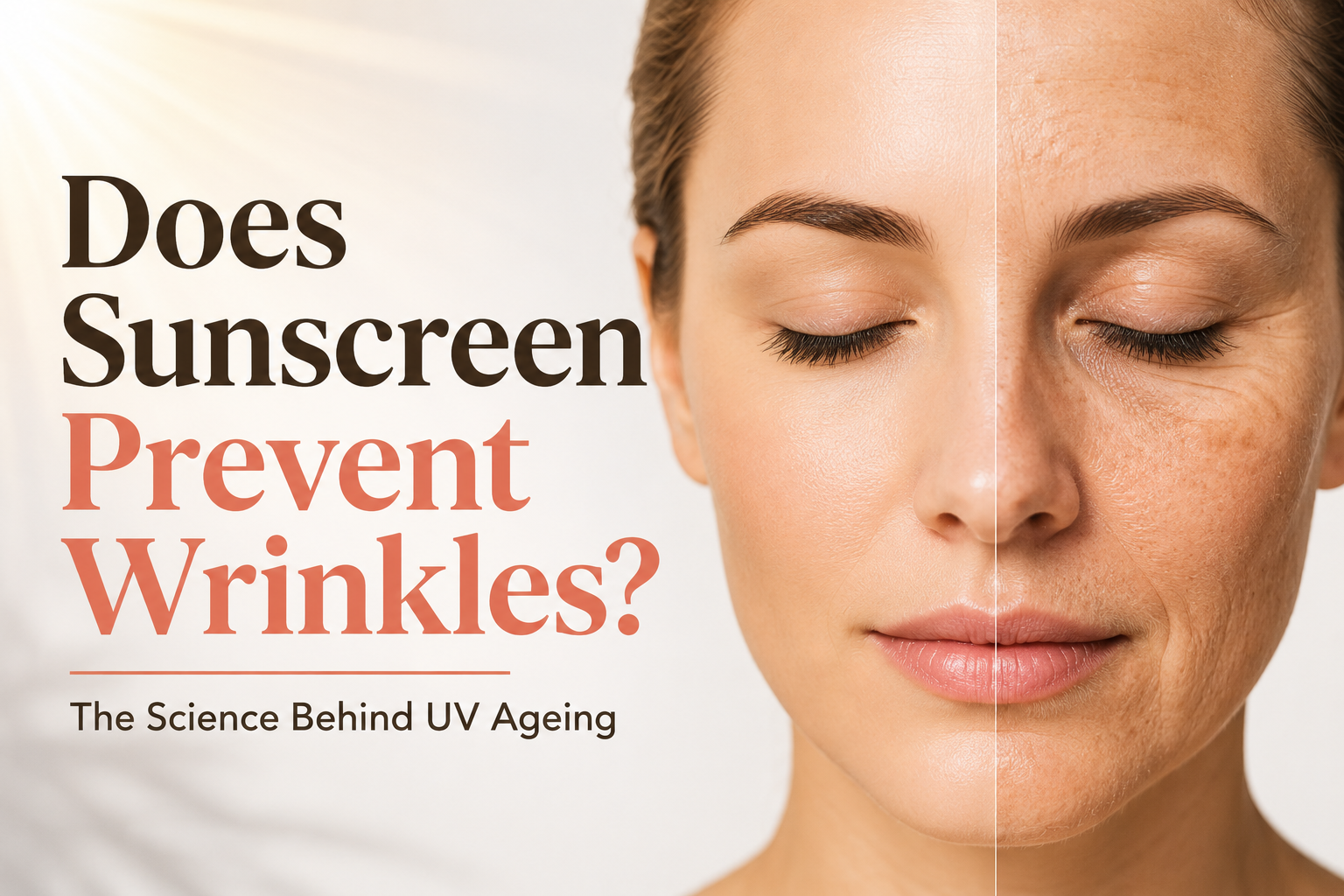
Many people assume wrinkles are simply an unavoidable part of getting older. While age does play a role, it is not the whole story. In fact, one of the biggest causes of visible skin ageing is something most of us encounter every day: sunlight.
You may have met people in their 50s with surprisingly smooth skin, while others develop fine lines and age spots much earlier. Genetics matter, but long-term sun exposure often explains much of the difference.
This is where the concept of photoaging, also known as UV ageing, becomes important. Scientists have spent decades studying how ultraviolet (UV) radiation affects the skin and whether sunscreen can help slow the process.
So, does sunscreen prevent wrinkles? The short answer is yes. Daily sunscreen use is one of the most effective ways to reduce premature skin ageing and protect your skin from future wrinkle formation.
Let’s explore the science behind UV ageing and how sunscreen fits into the picture.
What Causes Wrinkles in the First Place?
Wrinkles develop because of changes that occur within the skin over time. These changes happen through two main processes: intrinsic ageing and extrinsic ageing.
Intrinsic Ageing
Intrinsic ageing refers to the natural ageing process that occurs as we grow older. It is largely influenced by genetics and biological changes within the body.
As we age:
- Collagen production gradually declines.
- Skin becomes thinner.
- Cell turnover slows down.
- Moisture retention decreases.
- Elasticity weakens.
These changes contribute to fine lines, dryness, and gradual skin sagging.
Extrinsic Ageing
Extrinsic ageing is caused by environmental and lifestyle factors. These include:
- Sun exposure
- Smoking
- Air pollution
- Poor nutrition
- Chronic stress
- Lack of sleep
Among all external factors, UV radiation is considered the largest contributor to premature skin ageing.
Collagen Loss
Collagen is the protein responsible for keeping skin firm and smooth. When collagen levels decrease, the skin loses structural support, leading to wrinkles and sagging.
Elastin Breakdown
Elastin allows skin to stretch and return to its original shape. Damage to elastin causes the skin to become less resilient and more prone to creasing.
Skin Thinning
Over time, the skin becomes thinner and more fragile. This makes wrinkles and fine lines appear more noticeable.
Reduced Cell Turnover
Young skin renews itself quickly. As cell turnover slows with age, dullness, rough texture, and uneven skin tone become more common.
What Is UV Ageing (Photoaging)?
Photoaging refers to skin ageing caused by repeated exposure to ultraviolet radiation from the sun.
Unlike natural ageing, photoaging occurs because UV rays damage the skin’s support structures over time.
People often think ageing affects everyone equally, but UV exposure can dramatically accelerate the process.
For example:
- A person who spends years working outdoors without protection may develop deep wrinkles earlier.
- Someone who consistently uses sunscreen and protective clothing may maintain smoother skin for longer.
Researchers estimate that a significant portion of visible facial ageing is linked to chronic sun exposure rather than chronological age alone.
Common signs of photoaging include:
- Fine lines
- Deep wrinkles
- Dark spots
- Uneven pigmentation
- Rough skin texture
- Loss of elasticity
How UVA Rays Damage Your Skin
What Are UVA Rays?
UVA rays are long-wave ultraviolet rays that penetrate deeply into the skin.
Unlike UVB rays, UVA rays remain relatively constant throughout the year and can pass through clouds and glass windows.
Deep Skin Penetration
UVA rays reach the dermis, which is the deeper layer of skin where collagen and elastin are located.
This deep penetration makes UVA particularly harmful for skin ageing.
Collagen Destruction
Repeated UVA exposure activates enzymes called matrix metalloproteinases (MMPs).
These enzymes break down collagen fibers, weakening the skin’s structural framework.
Over time, this damage contributes directly to wrinkle formation.
Oxidative Stress
UVA rays generate unstable molecules known as free radicals.
These molecules damage healthy skin cells through a process called oxidative stress.
Free Radical Damage
Free radicals attack:
- Cell membranes
- DNA
- Proteins
- Collagen fibers
The cumulative effect accelerates skin ageing and increases the appearance of wrinkles.
Why UVA Is Closely Linked to Wrinkles
Because UVA rays target the skin’s deeper support structures, they are considered one of the primary causes of premature wrinkles and sagging.
This is why dermatologists emphasize broad-spectrum sunscreen protection that blocks UVA as well as UVB radiation.
How UVB Rays Affect Skin Health
What Are UVB Rays?
UVB rays are shorter ultraviolet wavelengths that primarily affect the outer layers of the skin.
These rays are strongest during peak daylight hours and are largely responsible for sunburn.
Sunburn and Inflammation
When UVB radiation damages skin cells, the body triggers inflammation as a protective response.
Repeated sunburns can contribute to long-term skin damage.
DNA Damage
UVB rays can directly damage the DNA inside skin cells.
Over time, this damage accumulates and increases the risk of:
- Premature ageing
- Pigmentation problems
- Skin cancer
Long-Term Effects on Appearance
Although UVB rays are more commonly associated with sunburn, they also contribute to:
- Uneven skin tone
- Dark spots
- Roughness
- Loss of skin quality
Together, UVA and UVB rays create the visible signs of photoaging.
Does Sunscreen Actually Prevent Wrinkles?
The Direct Answer
Yes. Scientific evidence strongly supports the idea that sunscreen helps prevent premature wrinkles caused by UV exposure.
What Research Shows
Numerous studies have examined the relationship between sunscreen use and skin ageing.
One of the most well-known studies followed participants over several years and found that individuals who used sunscreen daily showed significantly less skin ageing than those who used sunscreen only occasionally.
Researchers observed improvements in:
- Skin texture
- Fine lines
- Pigmentation
- Overall appearance of ageing
How Sunscreen Works
Sunscreen acts as a protective barrier by absorbing, reflecting, or scattering UV radiation before it damages the skin.
By reducing UV exposure, sunscreen helps preserve:
- Collagen
- Elastin
- Healthy skin cells
Realistic Expectations
It is important to understand that sunscreen is primarily preventive.
Sunscreen can:
- Slow the development of new wrinkles
- Reduce ongoing collagen damage
- Minimize photoaging
Sunscreen cannot:
- Completely erase deep existing wrinkles
- Reverse years of accumulated sun damage by itself
For existing wrinkles, treatments such as retinoids, laser therapies, and professional dermatological procedures may be needed.
What Happens When You Skip Sunscreen?
Many people think sunscreen is only necessary during beach vacations or outdoor sports.
In reality, UV exposure occurs throughout everyday life.
Cumulative UV Exposure
Skin damage builds gradually over months and years.
Even small amounts of daily exposure add up.
Common Sources of Daily UV Exposure
- Driving to work
- Walking outdoors
- Sitting near windows
- Running errands
- Outdoor dining
- Gardening
- Exercising outside
A few minutes here and there may not seem significant, but the cumulative effect can accelerate photoaging.
Practical Example
Imagine spending just 15 minutes outdoors twice a day without protection.
Over the course of years, that repeated exposure can contribute significantly to collagen breakdown and wrinkle formation.
Signs Your Skin May Already Have UV Damage
Photoaging often develops gradually, making it easy to overlook.
Common signs include:
Fine Lines
Small lines around the eyes, forehead, and mouth may indicate early UV damage.
Uneven Skin Tone
Patchy discoloration often develops after years of sun exposure.
Dark Spots
Sun spots, age spots, and pigmentation changes frequently result from UV damage.
Loss of Elasticity
Skin may appear looser or less firm than before.
Rough Texture
Damaged skin often feels dry, coarse, or uneven.
Premature Wrinkles
Wrinkles that appear earlier than expected may be linked to long-term photoaging.
How to Use Sunscreen Properly for Anti-Ageing Benefits
Choose the Right SPF
Dermatologists generally recommend:
- SPF 30 or higher for daily use
- SPF 50 for extended outdoor exposure
Apply Enough Product
Most adults need approximately:
- A nickel-sized amount for the face
- About one ounce for the entire body
Using too little sunscreen significantly reduces protection.
Reapply Regularly
Reapply every two hours when outdoors.
Reapply sooner if swimming or sweating heavily.
Make It a Daily Habit
Use sunscreen:
- Every morning
- During all seasons
- Even on cloudy days
Common Mistakes
Many people:
- Skip sunscreen indoors near windows
- Forget the neck and ears
- Apply too little product
- Fail to reapply
Correcting these habits can improve long-term skin protection.
Other Ways to Reduce Wrinkles Alongside Sunscreen
Sunscreen works best when combined with other healthy skin practices.
Protective Clothing
Wide-brim hats and long sleeves provide additional UV protection.
Sunglasses
Protecting the eye area helps reduce UV damage and squinting-related wrinkles.
Hydration
Well-hydrated skin often appears healthier and more resilient.
Healthy Diet
Foods rich in antioxidants help combat oxidative stress.
Good choices include:
- Berries
- Leafy greens
- Nuts
- Fish
Quality Sleep
During sleep, the skin undergoes important repair processes.
Avoid Smoking
Smoking accelerates collagen breakdown and wrinkle formation.
Helpful Skincare Ingredients
Ingredients supported by research include:
- Retinoids
- Vitamin C
- Niacinamide
- Peptides
- Hyaluronic acid
These ingredients can complement sunscreen as part of a broader anti-ageing routine.
Common Myths About Sunscreen and Wrinkles
Myth 1: Sunscreen Is Only Needed on Sunny Days
UV rays penetrate clouds and can still damage the skin on overcast days.
Myth 2: People With Dark Skin Don’t Need Sunscreen
Darker skin offers some natural protection but is still vulnerable to UV damage and photoaging.
Myth 3: Sunscreen Prevents Vitamin D Completely
Normal daily activities usually provide enough sunlight exposure for vitamin D production.
Myth 4: Makeup With SPF Is Enough
Most people do not apply enough makeup to achieve the labeled SPF protection.
Myth 5: Sunscreen Stops Working After a Few Minutes
Modern sunscreens provide protection for several hours but require reapplication during prolonged exposure.
Myth 6: Sunscreen Can Instantly Remove Wrinkles
Sunscreen prevents future damage. It is not a wrinkle eraser.
Final Verdict: Does Sunscreen Prevent Wrinkles?
So, does sunscreen prevent wrinkles?
The scientific evidence says yes.
Daily sunscreen use is one of the most effective ways to reduce UV ageing, preserve collagen, and slow the development of premature wrinkles. While sunscreen cannot reverse existing signs of ageing on its own, it plays a crucial role in preventing further damage.
Think of sunscreen as a long-term investment in your skin. The benefits may not be obvious after a few days or weeks, but consistent protection can make a meaningful difference over the years.
If you want healthier-looking skin in the future, one of the simplest and most effective habits is applying a broad-spectrum sunscreen every day, regardless of the weather.
Frequently Asked Questions
Q1) Can sunscreen reverse existing wrinkles?
Ans) No. Sunscreen cannot reverse deep existing wrinkles. Its main role is preventing further UV damage and slowing the development of new wrinkles. Existing wrinkles may improve with treatments such as retinoids, laser procedures, chemical peels, or other dermatologist-recommended therapies.
Q2) What SPF is best for preventing wrinkles?
Ans) Most dermatologists recommend using a broad-spectrum sunscreen with at least SPF 30 daily. SPF 50 may offer additional protection during extended outdoor activities or for people who spend significant time in the sun.
Q3) Is SPF 50 better than SPF 30 for anti-ageing?
Ans) SPF 50 blocks slightly more UVB radiation than SPF 30. While the difference is not dramatic, SPF 50 can provide extra protection when applied correctly, especially during prolonged sun exposure. Consistent daily use is more important than choosing the highest SPF available.
Q4) Can I get wrinkles even if I wear sunscreen?
Ans) Yes. Ageing is influenced by genetics, lifestyle, pollution, smoking, and natural biological changes. However, sunscreen significantly reduces one of the biggest causes of premature wrinkles: UV exposure.
Q5) Do I need sunscreen indoors?
Ans) If you spend time near windows or receive indirect sunlight indoors, sunscreen is recommended. UVA rays can penetrate glass and contribute to long-term photoaging.
Q6) Does sunscreen help with dark spots and pigmentation?
Ans) Yes. Sunscreen helps prevent UV-triggered pigmentation and can stop existing dark spots from becoming darker. It is often considered an essential part of any treatment plan for hyperpigmentation.
Q7) At what age should I start wearing sunscreen daily?
Ans) The earlier the better. Daily sunscreen use can benefit people of all ages. Starting in childhood or early adulthood helps reduce cumulative UV damage, but it is never too late to begin protecting your skin.
Q8) How long does sunscreen protection last?
Ans) Most sunscreens should be reapplied every two hours during outdoor exposure. Swimming, sweating, and towel drying can remove sunscreen more quickly, requiring more frequent reapplication.