

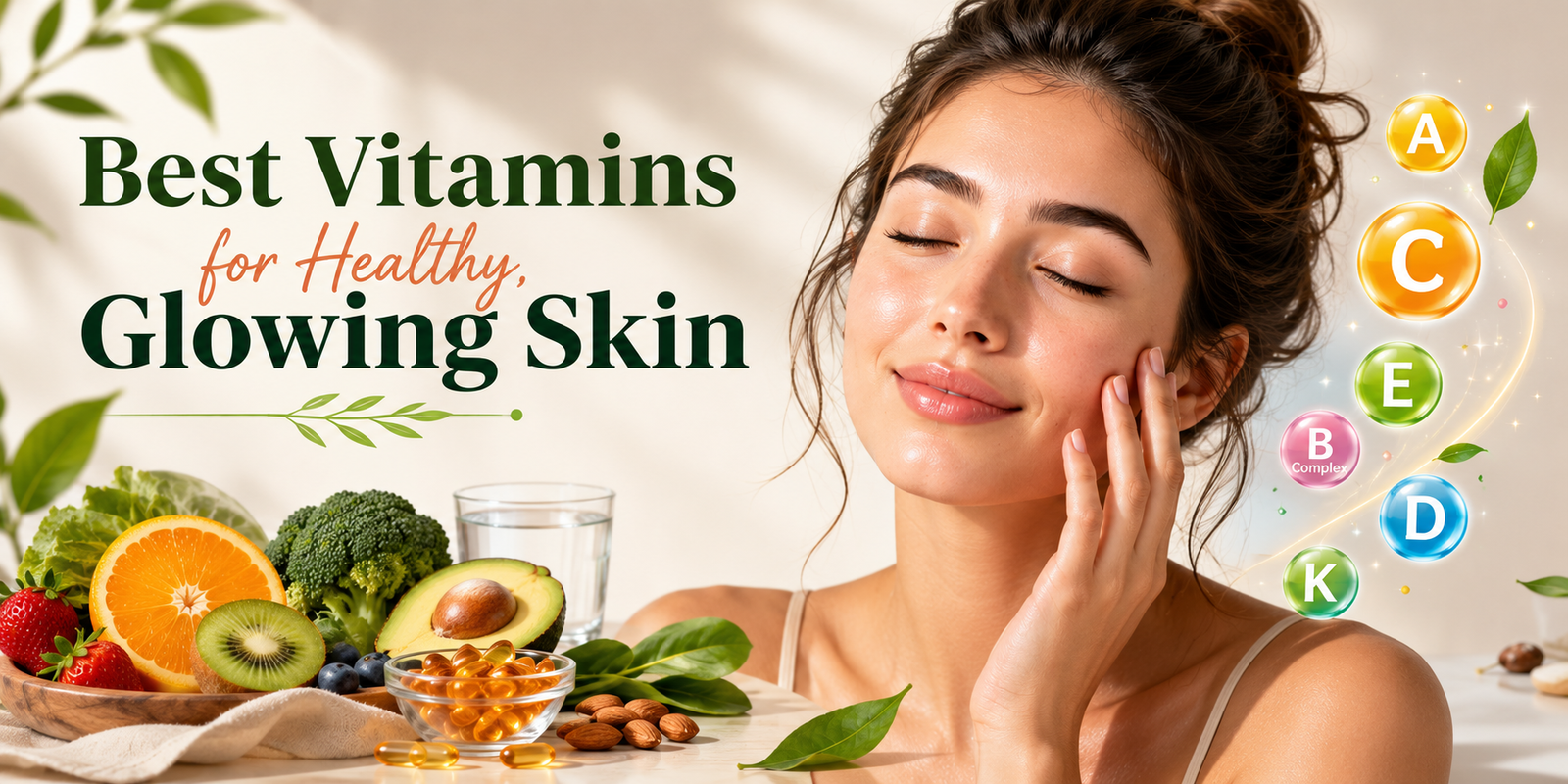
Your skin reflects what is happening inside your body. While a good skincare routine is important, healthy skin also depends on proper nutrition. Vitamins help your skin repair itself, stay hydrated, fight damage, and maintain a natural glow.
If your diet lacks essential vitamins, your skin may become dry, dull, or more prone to acne and early signs of aging. Eating a balanced diet with vitamin rich foods is one of the best ways to support healthy skin from within.
In this guide, you’ll learn about the best vitamins for healthy, glowing skin and the foods that naturally provide them.
Why Are Vitamins Important for Skin?
Your skin is the body’s largest organ and works hard every day to protect you from pollution, sunlight, and harmful bacteria. Vitamins support many important skin functions, including:
- Producing collagen for firm skin
- Repairing damaged skin cells
- Keeping skin hydrated
- Reducing inflammation
- Protecting against free radical damage
- Supporting faster wound healing
Getting enough vitamins through food helps your skin stay healthy naturally.
Vitamin A
Vitamin A helps your skin produce new cells and prevents dryness. It also supports the repair of damaged skin and may help reduce clogged pores.
Benefits
- Promotes smooth skin
- Helps reduce dry and flaky skin
- Supports healthy skin cell turnover
- May improve acne prone skin
Food Sources
- Sweet potatoes
- Carrots
- Spinach
- Kale
- Eggs
- Liver
Vitamin C
Vitamin C is one of the most important vitamins for glowing skin. It helps your body produce collagen, which keeps your skin firm and youthful. It also protects the skin from environmental damage.
Benefits
- Boosts collagen production
- Brightens dull skin
- Helps reduce dark spots
- Supports faster healing
- Protects against free radicals
Food Sources
- Oranges
- Kiwi
- Strawberries
- Bell peppers
- Broccoli
- Tomatoes
Vitamin E
Vitamin E is a powerful antioxidant that protects your skin from damage caused by pollution and sunlight. It also helps keep your skin soft and moisturized.
Benefits
- Prevents moisture loss
- Supports skin repair
- Reduces dryness
- Protects skin cells
Food Sources
- Almonds
- Sunflower seeds
- Avocados
- Spinach
- Peanuts
Vitamin D
Vitamin D plays an important role in skin health and the immune system. Low vitamin D levels have been linked to several skin conditions in some people.
Benefits
- Supports healthy skin barrier
- Helps skin repair
- Supports immune function
- May reduce inflammation
Food Sources
- Fatty fish
- Egg yolks
- Fortified milk
- Mushrooms
- Safe sunlight exposure
Vitamin B Complex
The B vitamins help your skin stay hydrated and support healthy skin cell growth.
Benefits
- Improves skin texture
- Helps maintain moisture
- Supports healthy skin renewal
- May reduce redness
Food Sources
- Whole grains
- Eggs
- Dairy products
- Chicken
- Fish
- Beans
Vitamin K
Vitamin K is known for supporting proper blood circulation and healing. It may help improve the appearance of certain skin concerns.
Benefits
- Supports wound healing
- May reduce the appearance of dark circles
- Helps improve skin recovery
Food Sources
- Broccoli
- Kale
- Spinach
- Brussels sprouts
Can You Get Enough Vitamins Through Food?
In most cases, yes. A healthy diet that includes fruits, vegetables, whole grains, healthy fats, and lean proteins can provide the vitamins your skin needs.
If you have a medical condition or a vitamin deficiency, speak with a healthcare professional before taking supplements. Taking high doses of certain vitamins without medical advice may not be safe.
Other Tips for Naturally Glowing Skin
Vitamins work best when combined with healthy daily habits.
- Drink enough water every day.
- Eat a balanced diet rich in colorful fruits and vegetables.
- Get enough sleep each night.
- Wear sunscreen when spending time outdoors.
- Avoid smoking.
- Manage stress through exercise or relaxation techniques.
- Follow a gentle skincare routine suitable for your skin type.
Final Thoughts
Healthy, glowing skin starts from the inside. Vitamins A, C, D, E, K, and the B complex all play an important role in keeping your skin strong, hydrated, and healthy.
Rather than looking for a quick solution, focus on eating a balanced diet filled with nutrient rich foods. Combined with good skincare habits and a healthy lifestyle, these vitamins can help your skin look its best over time.
Frequently Asked Questions
Q1) Which vitamin is best for glowing skin?
Ans: Vitamin C is often considered one of the best vitamins for glowing skin because it supports collagen production, brightens the skin, and protects against environmental damage.
Q2) Can vitamins help reduce acne?
Ans: Some vitamins, including Vitamin A and certain B vitamins, support healthy skin and may help improve acne when combined with proper skincare and medical advice if needed.
Q3) Is it better to get vitamins from food or supplements?
Ans: Most people can get enough vitamins from a balanced diet. Supplements should only be taken if recommended by a healthcare professional.
Q4) How long does it take to see results from vitamins?
Ans: Skin improvements usually take several weeks or months because skin cells naturally renew over time. Consistency is important.
Q5) Does drinking water improve glowing skin?
Ans: Staying hydrated supports healthy skin function and can improve skin appearance, especially when combined with a nutritious diet and good skincare habits.
Q6) Can too much vitamin intake harm the skin?
Ans: Yes. Taking excessive amounts of certain vitamins, especially fat soluble vitamins like A and D, may cause health problems. Always follow medical advice before taking supplements.