

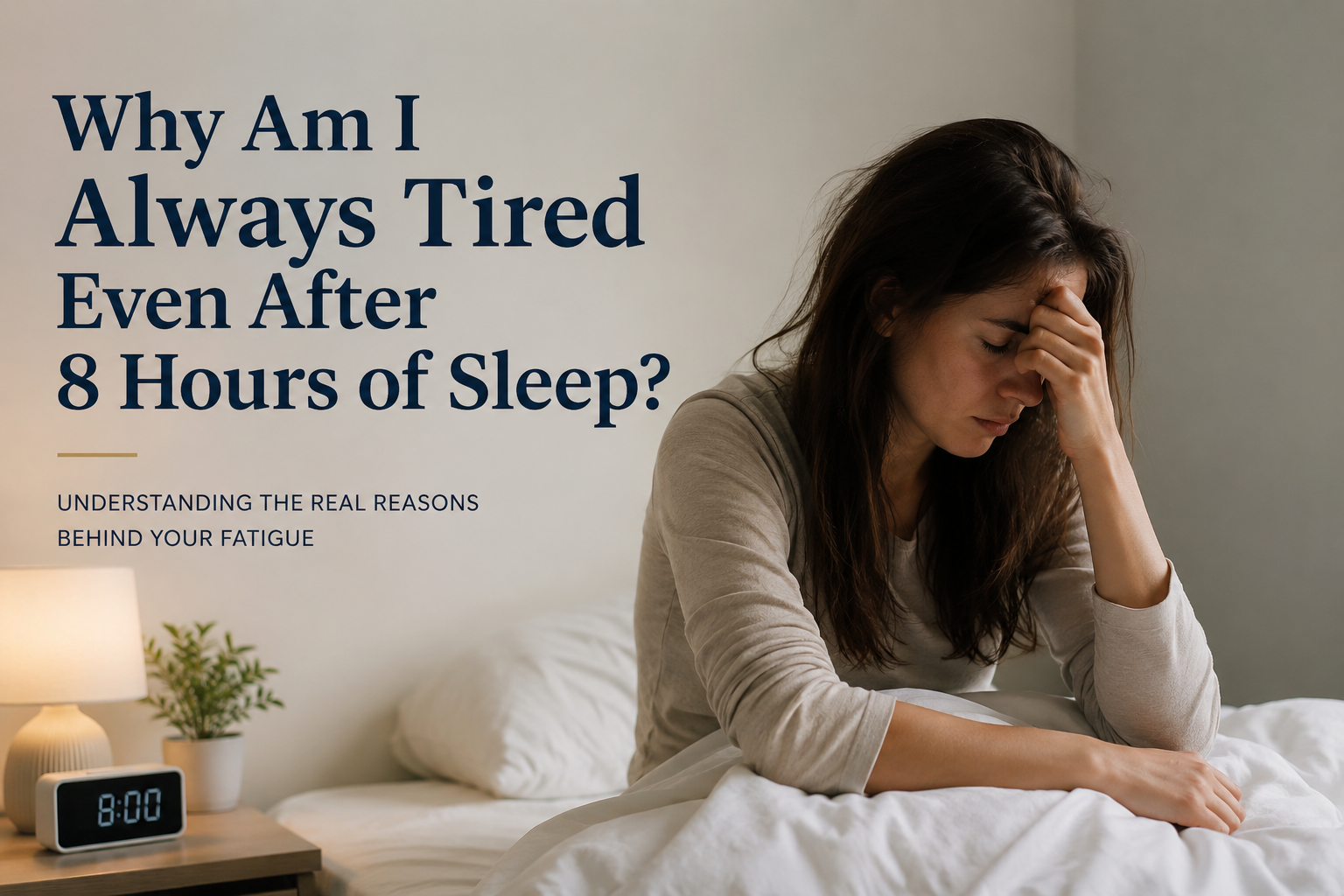
before your day has even started?
Many people assume that sleeping for eight hours automatically means they should feel refreshed and energized. Yet millions of adults regularly experience persistent tiredness despite spending enough time in bed. If you constantly find yourself reaching for coffee, struggling to focus, or feeling drained throughout the day, your body may be trying to tell you something important.
The truth is that sleep duration is only one piece of the puzzle. Your energy levels are influenced by sleep quality, stress, nutrition, physical activity, mental health, medical conditions, and many other factors. Simply sleeping longer does not always solve the problem.
In this guide, we’ll explore the most common reasons why you may feel tired even after 8 hours of sleep, what warning signs to watch for, and practical ways to improve your energy naturally.
What Does It Mean If You Feel Tired After Getting Enough Sleep?
Feeling tired after sleeping for eight hours usually indicates that your body is not getting the restorative rest it needs. While sleep quantity matters, sleep quality is often even more important.
According to the Centers for Disease Control and Prevention (CDC), adults generally need between seven and nine hours of sleep per night. However, research shows that sleep quality, including uninterrupted sleep and healthy sleep cycles, plays a major role in how refreshed you feel the next day.
During sleep, your body goes through several stages, including deep sleep and REM sleep. These stages help repair tissues, support brain function, regulate hormones, and restore energy. If these cycles are disrupted, you may wake up feeling just as tired as when you went to bed.
Common Reasons You Feel Tired Even After 8 Hours of Sleep
Poor Sleep Quality Despite Sleeping Long Enough
One of the most common reasons for waking up tired is poor sleep quality.
You may spend eight hours in bed, but if your sleep is fragmented, restless, or frequently interrupted, your body cannot complete its normal recovery process.
Common causes of poor sleep quality include:
- Frequent waking during the night
- Noise disturbances
- Uncomfortable sleeping conditions
- Excessive caffeine intake
- Alcohol consumption before bed
- Irregular sleep schedules
Many people don’t even realize they wake up multiple times during the night because these awakenings can be brief. However, they can significantly affect how rested you feel the next morning.
Sleep Apnea and Breathing Problems
Sleep apnea is a serious but often undiagnosed condition that can leave you feeling exhausted despite getting enough sleep.
Obstructive sleep apnea occurs when the airway repeatedly becomes blocked during sleep, causing breathing interruptions. These interruptions can happen dozens or even hundreds of times per night.
Common symptoms include:
- Loud snoring
- Gasping for air during sleep
- Morning headaches
- Dry mouth upon waking
- Daytime fatigue
According to the American Academy of Sleep Medicine, nearly 30 million adults in the United States may have sleep apnea, but many remain undiagnosed.
Because the brain repeatedly wakes the body to restart breathing, sleep becomes fragmented and less restorative.
Stress and Mental Exhaustion
Mental fatigue can feel just as draining as physical exhaustion.
If you’re constantly worrying about work, finances, relationships, or personal responsibilities, your brain may remain in a heightened state of alertness even while you sleep.
Chronic stress increases cortisol levels, which can interfere with healthy sleep patterns and make it difficult to achieve deep restorative sleep.
Many people experiencing high stress report:
- Waking up tired
- Difficulty concentrating
- Irritability
- Lack of motivation
- Feeling mentally drained throughout the day
Even if your body gets enough sleep, an overworked mind can leave you feeling exhausted.
Dehydration and Poor Nutrition
Your body relies on water and nutrients to produce energy efficiently.
Even mild dehydration can reduce energy levels and impair concentration. Research has shown that losing as little as 1 to 2 percent of body water can negatively affect mood, alertness, and cognitive performance.
Poor dietary habits can also contribute to fatigue.
Skipping meals, eating excessive processed foods, or consuming too much sugar may cause blood sugar fluctuations that leave you feeling sluggish.
A balanced diet that includes lean protein, healthy fats, fruits, vegetables, and whole grains helps support consistent energy throughout the day.
Lack of Physical Activity
It may seem surprising, but being inactive can actually make you feel more tired.
Regular movement improves circulation, supports heart health, enhances sleep quality, and boosts energy production.
Research published in the journal Psychotherapy and Psychosomatics found that sedentary individuals who began exercising regularly experienced significant improvements in energy levels and reductions in fatigue.
Even moderate activities such as walking, cycling, or swimming can make a noticeable difference.
Vitamin and Mineral Deficiencies
Several nutrient deficiencies are closely linked to fatigue.
Iron Deficiency
Iron helps transport oxygen throughout the body. Low iron levels can result in fatigue, weakness, dizziness, and difficulty concentrating.
Vitamin B12 Deficiency
Vitamin B12 is essential for nerve function and red blood cell production. A deficiency may cause tiredness, memory problems, and low energy.
Vitamin D Deficiency
Low vitamin D levels are extremely common worldwide and have been associated with fatigue, muscle weakness, and mood changes.
Magnesium Deficiency
Magnesium supports hundreds of biochemical processes, including energy production and muscle function. Inadequate levels may contribute to tiredness and poor sleep quality.
Blood tests can help identify deficiencies that may be affecting your energy.
Blood Sugar Imbalances
Blood sugar levels have a major impact on how energized you feel.
When blood sugar rises rapidly after consuming sugary foods or refined carbohydrates, it is often followed by a sharp drop. This can leave you feeling tired, hungry, and mentally foggy.
People with insulin resistance, prediabetes, or diabetes may experience ongoing fatigue due to difficulty regulating blood sugar levels.
Choosing high-fiber foods and balanced meals can help maintain more stable energy throughout the day.
Excessive Screen Time
Modern lifestyles often involve hours of daily screen exposure.
Phones, tablets, computers, and televisions emit blue light, which can interfere with melatonin production. Melatonin is the hormone that helps regulate sleep.
Using screens late into the evening can make it harder to fall asleep and reduce sleep quality.
Additionally, constant digital stimulation can contribute to mental fatigue, making you feel drained even after sleeping.
Depression and Anxiety
Mental health conditions frequently affect both sleep and energy levels.
Depression can cause:
- Persistent fatigue
- Loss of interest in activities
- Difficulty concentrating
- Sleep disturbances
Anxiety may lead to racing thoughts, poor sleep quality, muscle tension, and emotional exhaustion.
Many people assume fatigue is purely physical when, in reality, mental health may be playing a significant role.
Underlying Medical Conditions
Sometimes persistent tiredness is linked to an underlying health condition.
Several medical issues can contribute to ongoing fatigue, including:
Thyroid Disorders
An underactive thyroid can slow metabolism and reduce energy production.
Chronic Fatigue Syndrome
This complex condition causes severe fatigue that does not improve with rest.
Anemia
Low red blood cell levels can reduce oxygen delivery throughout the body.
Heart Disease
Poor circulation may cause weakness and fatigue.
Autoimmune Diseases
Conditions such as lupus and rheumatoid arthritis often involve chronic tiredness.
Diabetes
Uncontrolled blood sugar levels can significantly affect energy levels.
If fatigue persists despite healthy lifestyle changes, medical evaluation may be necessary.
Signs Your Constant Fatigue May Be Serious
Occasional tiredness is normal, especially during stressful periods. However, some symptoms may indicate a more serious issue.
Seek medical attention if fatigue occurs alongside:
- Unexplained weight loss
- Persistent fever
- Chest pain
- Shortness of breath
- Severe headaches
- Frequent dizziness
- Memory problems
- Depression symptoms
- Extreme daytime sleepiness
Fatigue that lasts for several weeks or interferes with daily life should not be ignored.
How to Improve Your Energy Levels Naturally
The good news is that many causes of fatigue can be improved through lifestyle changes.
Start by focusing on sleep quality rather than sleep quantity alone.
Maintain a consistent sleep schedule, even on weekends. Going to bed and waking up at the same time helps regulate your body’s internal clock.
Create a sleep-friendly environment by keeping your bedroom cool, dark, and quiet.
Limit caffeine intake during the afternoon and evening. While caffeine may provide temporary alertness, it can disrupt nighttime sleep and contribute to a cycle of fatigue.
Stay hydrated throughout the day. Drinking enough water supports circulation, brain function, and energy production.
Focus on balanced meals that provide steady fuel rather than quick energy spikes.
Daily Habits That Can Help You Feel More Energized
Small daily habits often have a surprisingly large impact on energy levels.
Start your morning with natural sunlight exposure. Morning sunlight helps regulate circadian rhythms and improve wakefulness.
Take regular movement breaks throughout the day. Even a short walk can boost circulation and reduce feelings of fatigue.
Manage stress through activities such as meditation, deep breathing exercises, journaling, or spending time outdoors.
Reduce screen exposure before bed. Consider turning off electronic devices at least one hour before sleep.
Prioritize social connections and enjoyable activities. Positive interactions can support emotional well-being and improve overall energy.
Avoid relying solely on energy drinks or excessive caffeine. These may provide short-term stimulation but often worsen fatigue over time.
When Should You See a Doctor?
If you have been consistently tired for several weeks despite getting adequate sleep and maintaining healthy habits, it may be time to seek medical advice.
A healthcare provider can evaluate potential causes through a detailed medical history, physical examination, and laboratory testing.
You should especially consider seeing a doctor if:
- Fatigue is worsening over time
- You struggle to stay awake during the day
- Sleep does not feel refreshing
- You have symptoms of depression or anxiety
- You experience unexplained physical symptoms
Identifying the underlying cause early can help prevent complications and improve quality of life.
Final Thoughts
If you’ve been asking yourself, “Why am I always tired even after 8 hours of sleep?” you’re not alone. Persistent fatigue is a common problem that affects millions of people, but it is rarely caused by a lack of sleep alone.
Poor sleep quality, stress, dehydration, nutritional deficiencies, lack of exercise, mental health challenges, sleep disorders, and medical conditions can all contribute to feeling exhausted despite spending enough time in bed.
The first step is paying attention to your habits, symptoms, and overall health. Improving sleep quality, eating a balanced diet, staying active, managing stress, and addressing any underlying health concerns can often lead to noticeable improvements in energy.
If your fatigue persists or worsens, don’t ignore it. Speaking with a healthcare professional can help uncover the root cause and get you back to feeling your best.
Frequently Asked Questions
Question 1: Why do I feel tired even after sleeping 8 hours?
Answer:
Feeling tired after sleeping eight hours can happen when your sleep quality is poor rather than your sleep duration. Conditions such as sleep apnea, stress, anxiety, nutrient deficiencies, dehydration, and underlying medical issues may prevent your body from getting restorative sleep. Even though you spend enough time in bed, disrupted sleep cycles can leave you feeling exhausted the next day.
Question 2: Can stress make me tired all the time?
Answer:
Yes, chronic stress can significantly contribute to ongoing fatigue. When stress levels remain high, the body produces more cortisol and stays in a heightened state of alertness. This can interfere with sleep quality, increase mental exhaustion, and reduce your ability to recover properly, leading to persistent tiredness.
Question 3: What vitamin deficiency causes fatigue?
Answer:
Several vitamin and mineral deficiencies can cause fatigue. The most common include vitamin D deficiency, vitamin B12 deficiency, iron deficiency, and magnesium deficiency. These nutrients play important roles in energy production, oxygen transport, and nervous system function. Blood tests can help identify deficiencies and guide appropriate treatment.
Question 4: When should I worry about constant tiredness?
Answer:
You should consider medical evaluation if fatigue lasts for several weeks, worsens over time, interferes with daily activities, or occurs alongside symptoms such as unexplained weight loss, shortness of breath, chest pain, severe headaches, or depression. Persistent fatigue may indicate an underlying health condition that requires treatment.
Question 5: How can I increase my energy naturally?
Answer:
Natural ways to increase energy include maintaining a consistent sleep schedule, staying hydrated, eating balanced meals, exercising regularly, reducing stress, limiting screen time before bed, and ensuring adequate intake of essential vitamins and minerals. Healthy lifestyle habits often have a significant impact on energy levels over time.
Question 6: Can dehydration cause fatigue?
Answer:
Yes, dehydration is a common but often overlooked cause of fatigue. When your body lacks sufficient fluids, blood circulation becomes less efficient, making it harder to deliver oxygen and nutrients to tissues. Even mild dehydration can lead to low energy, poor concentration, headaches, and reduced physical performance.
Question 7: Is it normal to wake up tired every day?
Answer:
Occasionally waking up tired is normal, especially during stressful periods. However, consistently waking up exhausted every day is not considered normal and may indicate poor sleep quality, sleep disorders, lifestyle factors, or an underlying health condition. Persistent symptoms should be evaluated by a healthcare professional.
Question 8: What medical conditions can cause fatigue?
Answer:
Many medical conditions can contribute to fatigue, including sleep apnea, thyroid disorders, anemia, diabetes, heart disease, chronic fatigue syndrome, autoimmune diseases, depression, and anxiety disorders. Proper medical assessment is important to determine the exact cause and develop an effective treatment plan.