

Longevity in U.S. music isn’t an accident, and it isn’t just about hit songs. The American artists who stay influential across decades tend to master three arenas at once: the craft, the business, and the culture that forms around them.
What’s changed is the terrain. The modern audience discovers music through streaming libraries, short-form video, playlists, and global fan communities. Yet a select group of American top music artistes still sells stadium tickets, moves the conversation, and routinely turns new releases into events.
Their staying power explains a lot about the American music industry evolution especially how stars have learned to outlast formats, trends, and even the labels that originally broke them.
What defines long-term success in the American music industry?
Sustained success in the U.S. music industry can be measured in ways other than just how high one can climb the charts. After the hype dies down, staying economically viable and culturally important in the industry is what truly matters.
A long-lasting career often encompasses a high-quality catalog (songs people come back to), a touring brand that can scale from arenas to stadiums, and a fanbase that is generationally cross-renewing. Industry enough veterans also safeguard their leverage: publishing, masters, touring terms, and creative control.
Telling stories and sticking to the same narrative brings something really important: consistency. Successful American music artists who inspire listeners manage to give listeners important reasons to give them a check-in through consistency, reinvention and real-life anchored point of view.
How the industry changed and how top artistes adapted
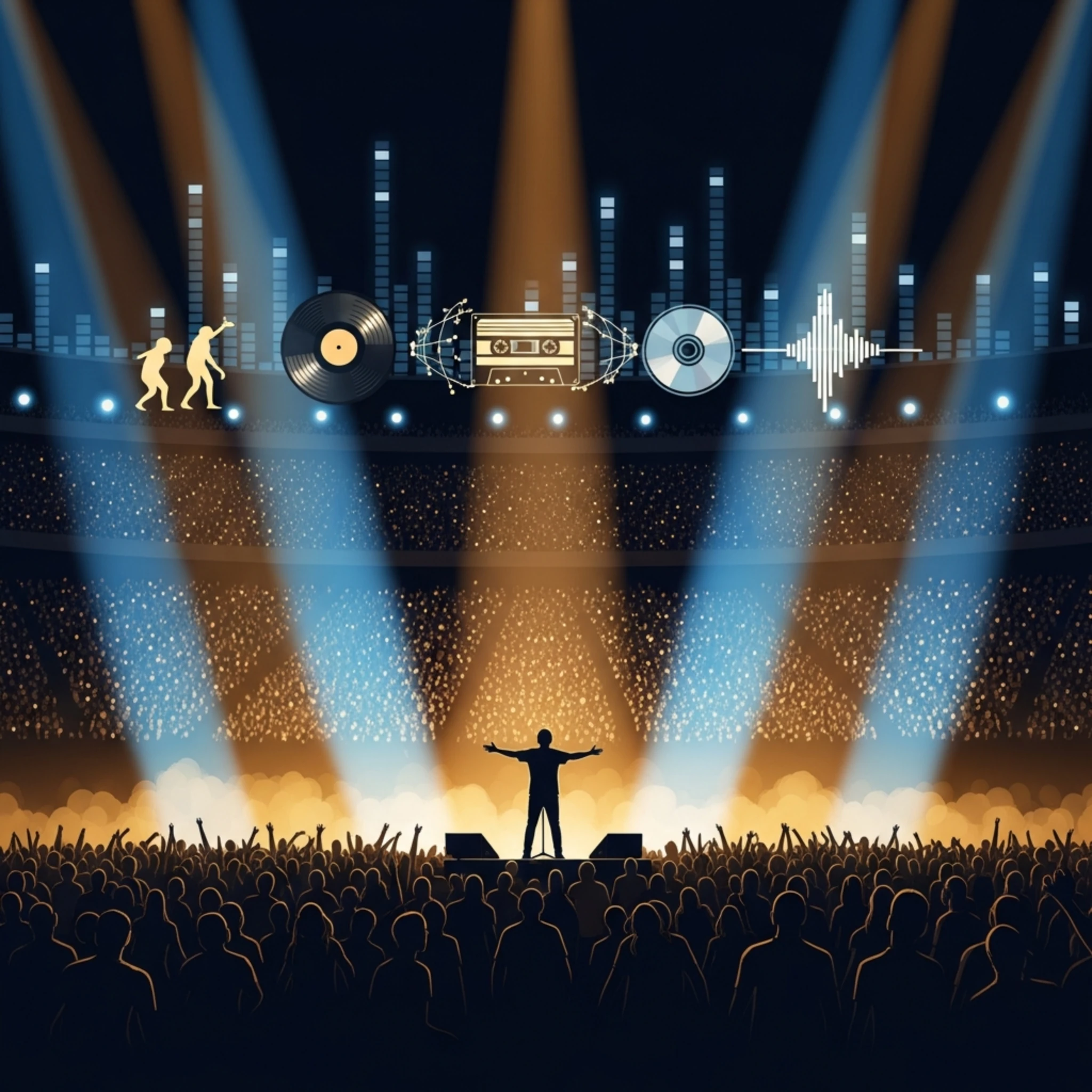
The U.S. market has moved through several structural eras: radio-and-retail dominance, the MTV video economy, CD-driven blockbuster cycles, the digital-download disruption, and the current streaming era where catalog and consistency often outperform one-time peaks.
Streaming shifted power toward always-available libraries and long-tail discovery. Touring became even more central as recorded-music revenue fragmented, and merch/VIP ecosystems matured into major profit centers. Labels also consolidated, and “360-style” participation made contract leverage more contentious for stars.
Technology changed the artist toolkit, too. High-level artists now treat content pipelines, data visibility, and direct-to-fan communication as basic infrastructure an approach that mirrors what we’ve covered on Legitloaded about how independent musicians use smart music tools to compete with major labels.
Behind the scenes, automated production and distribution tools are reshaping workflows in recording, marketing, and rights management, which connects directly to our in-depth coverage on Legitloaded about how advanced automation is shaping the modern music industry and labels. For legacy acts, adaptation often means learning new release strategies without sacrificing the “event” feel that built their brand.
Case studies: American top music artistes with long-lasting music careers
Beyoncé: performance discipline, cultural authorship, and modern release strategy
Beyoncé has endured largely because of a strange but precise mixing of the following elements: performance standards, aesthetic control, and a continually shifting definition of what a “pop star” can be in the United States. She has weathered eras, from singles dominating the radio to cultural full-album moments, all while keeping her brand focused on excellence and not constant visibility.
More than anything else, however, she sees the album as a statement rather than just another single-length piece of work. And in doing so, she remains a top-tier artist-keeping her visual presentation, touring and selective collaborations aligned to both mainstream and institution-level. That’s how a first-rate artist maintains her relevance and has no need to get on the popular bandwagon every month.
Taylor Swift: songwriting ownership, fan community, and catalog strategy
Swift’s long-term power comes from craft and structure: strong songwriting, clear eras, and a community that treats albums like chapters. Few modern careers show how storytelling can translate directly into business leverage.
Her methods of fan communication, touring, and re-recordings display a contemporary fact: in the streaming age, a catalog is not the past-it is the engine. Swift made catalog front page news. In doing so, she stressed how musicians can safeguard their long term value and still satisfy the need for constant narrative updates.
Jay-Z: reinvention through business, alliances, and taste-making
Jay-Z has shown how to go from artist to ecosystem in the industry. Musically, he has documented the best work of his life, which, in turn, keeps his persona credible as he ages. In business, he has considered ownership and partnership as extensions of his artistry, rather than as side quests.
In practical terms, he understood earlier than most that long-term influence comes from controlling access-distribution relationships, touring infrastructure, and strategic collaborations. He also modeled a modern hip-hop trajectory where the artist becomes a cultural executive without abandoning the music.
Madonna: continuous reinvention as a career skill
If you mention Madonna, you can not ignore her most central method–re-invention as discipline(adapted from F-M Seminar).From radio to video culture and then dance pop cycles; from pop ‘s outermost limit as a label on the one hand or more gently moving target in detail to whether there were any sexual or racial boundaries around image and so forth across decades, Madonna had transformed herself for every new age of mass enjoyment.
What the relevance she has for the present industry is not nostalgia but a model. Modern pop careers all depend on era-based aesthetics, strategically managed controversy, and the ability to continually reinvent oneself. Madonna not only profited by these means; she made them household terms in mainstream U.S. markets.
Bruce Springsteen: identity, live reputation, and generational trust
Springsteen is an example of a different longevity model: Consistency without stagnation. His catalog is built on character-level songwriting and his reputation as a premium touring act became a trust contract with fans for the long haul. When the live show is the product audience loyalty is inelastic to shifts in the format.
He’s also a reminder that cultural impact of American musicians isn’t only about dominating Top 40. Some careers endure because the artist’s identity values, voice, and place in American storytelling becomes bigger than any single release cycle.
Dolly Parton: cross-genre reach, public goodwill, and brand stability
Dolly Parton’s endurance is a masterclass in cross-genre mobility and public trust. She’s maintained relevance through songwriting, collaboration, and a brand persona that feels both consistent and flexible-country-rooted but not country-limited.
Her career also illustrates how longevity increasingly depends on being “platform-proof.” Whether audiences find her through classic records, duets, live appearances, or new-media moments, the throughline remains intact. In a fractured attention economy, that kind of clarity is a competitive advantage.
Dr. Dre: curatorial power and the producer as franchise
Dr. Dre’s long-term influence comes from curation as much as creation. As a producer, he’s functioned like a label within the culture shaping sound, selecting voices, and introducing artists who then redefine rap’s center.
That role travels well across decades because it isn’t tied to one format. When distribution changed, the demand for definitive taste-making didn’t disappear; it intensified. Dre’s legacy highlights a core truth about the modern business: the people who can reliably identify and package “the next” become permanent fixtures.
Eminem: technical identity, audience loyalty, and global reach
Eminem’s durability relies on a certain technical brand lyricism as literature and a bond with audiences that has endured despite changes in hip-hop’s mainstream aesthetics. Also, he illustrates how the U.S. artist’s influences the world: it shows that for some American careers, the foreign audience sustains them not as a fad but as a constant.
His catalogue continues to travel due to the core proposition being stable. There is a voice, a skill, and an emotional fervor that even the most disinterested listeners would recognize, even if they do not attend to each and every newly released track.
Why some American artistes remain influential for decades
The most consistent pattern is not genre, age, or even chart strategy. It’s the ability to build systems that outlast a single album cycle.
Common longevity factors include:
– Catalog that people live with, not just consume once
– Touring excellence that turns live shows into a repeat habit
– Brand clarity (a recognizable point of view) paired with selective reinvention
– Business leverage through ownership, partnerships, and smart timing
– Cross-generational fan renewal, often through collaborations and cultural moments
– Format agility, adapting to streaming, social media, and new discovery paths
These traits show up differently for each artist, but the outcome is the same: relevance that persists when the market rotates.
What sustained success means for the modern music industry
Legacy-level careers now shape the whole marketplace. Touring economics, festival booking, catalog valuation, and even release-window strategy are influenced by the standards set by long-running stars. When a veteran act proves that albums can still be events or that a catalog can outperform new releases-labels, managers, and newer artists adjust their playbooks.
Longevity also intersects with global competition. As explored in our in-depth coverage on Legitloaded about global music shifts and America’s evolving influence, U.S. dominance is no longer automatic in every region or genre. Long-standing American stars remain important because they act as cultural anchors-artists the world recognizes even as local scenes rise everywhere.
For emerging acts, the lesson isn’t “copy the legends.” It’s to study the structure: build a catalog, own relationships with fans, protect leverage, and treat each era as part of a longer narrative.
The bottom line: longevity is still America’s quiet superpower
The American music industry keeps changing, but durable careers still function as its most reliable export. The best American top music artistes aren’t simply surviving; they’re modeling how to hold cultural attention, maintain economic power, and translate identity across generations.
If you want to understand where the business is going-independent strategy, label dynamics, new production tools, and shifting global taste-track how the long-haul artists adapt. And for deeper reporting and analysis on those moving parts, our ongoing coverage on Legitloaded connects the dots between the legends and the next wave.