

Poor sleep quality has become a surprisingly common complaint in modern life. Late-night screen time, irregular schedules, stress, and everyday noise can make it harder to fall asleep-and even harder to stay Poor sleep quality has become a surprisingly common complaint in modern life. Late-night screen time, irregular schedules, stress, and everyday noise can make it harder to fall asleep-and even harder to stay asleep. The result is often the same: you wake up feeling unrefreshed, foggy, or irritable, even if you technically spent enough hours in bed.
Soothing music is one of the non-invasive methods that a large number of individuals resort to. Intentional use of calming music, relaxing sleep music, and other sounds that can help you sleep can facilitate a more relaxing bedtime scene, as the mind and body can transition out of the so-called busy mode and into a calmer one, without the help of anything harsh and disruptive. You will find out below how sound influences sleep, what type of music is the most effective and how to use it efficiently at night.
Understanding the Science of Sleep and Sound
Sleep is not just “switching off.” It’s a series of biological stages guided by brain activity, hormones, and your nervous system. Sound-including calming music-can influence how smoothly you transition into those stages.
How the Brain Responds to Music Before Sleep
When you listen to relaxing music at bedtime, several helpful changes may occur:
- Parasympathetic nervous system activation: This is your “rest and digest” mode. It counterbalances stress-driven alertness and promotes relaxation.
- Reduced perceived stress reaction: Relaxation soundscapes are generally related to less tension and a more relaxed state of mind.
- Reduction in heart rate and breathing patterns: It is a natural ability of many people to breathe more slowly listening to slow and rhythmic sounds as it turns out to be easier to relax.
Tip for readers: In case you find yourself carrying the day into bed in your mind, relaxing music to sleep may serve as a transitional tool between the day and the nights..
Why Silence Isn’t Always Ideal for Sleep
Silence may be quiet-but it may also cause you to be more sensitive to sudden disturbances. The usual culprits of sleep distraction are the traffic, neighbors, pets or a whirring appliance. Light audio can be used in such situations to mask unpredictable noises that can aid in the continuity of sleep.
This is the reason why certain individuals sleep with relaxing music or sounds to sleep as opposed to complete silence, particularly in the noisy places.
What Is Soothing Music for Sleep?
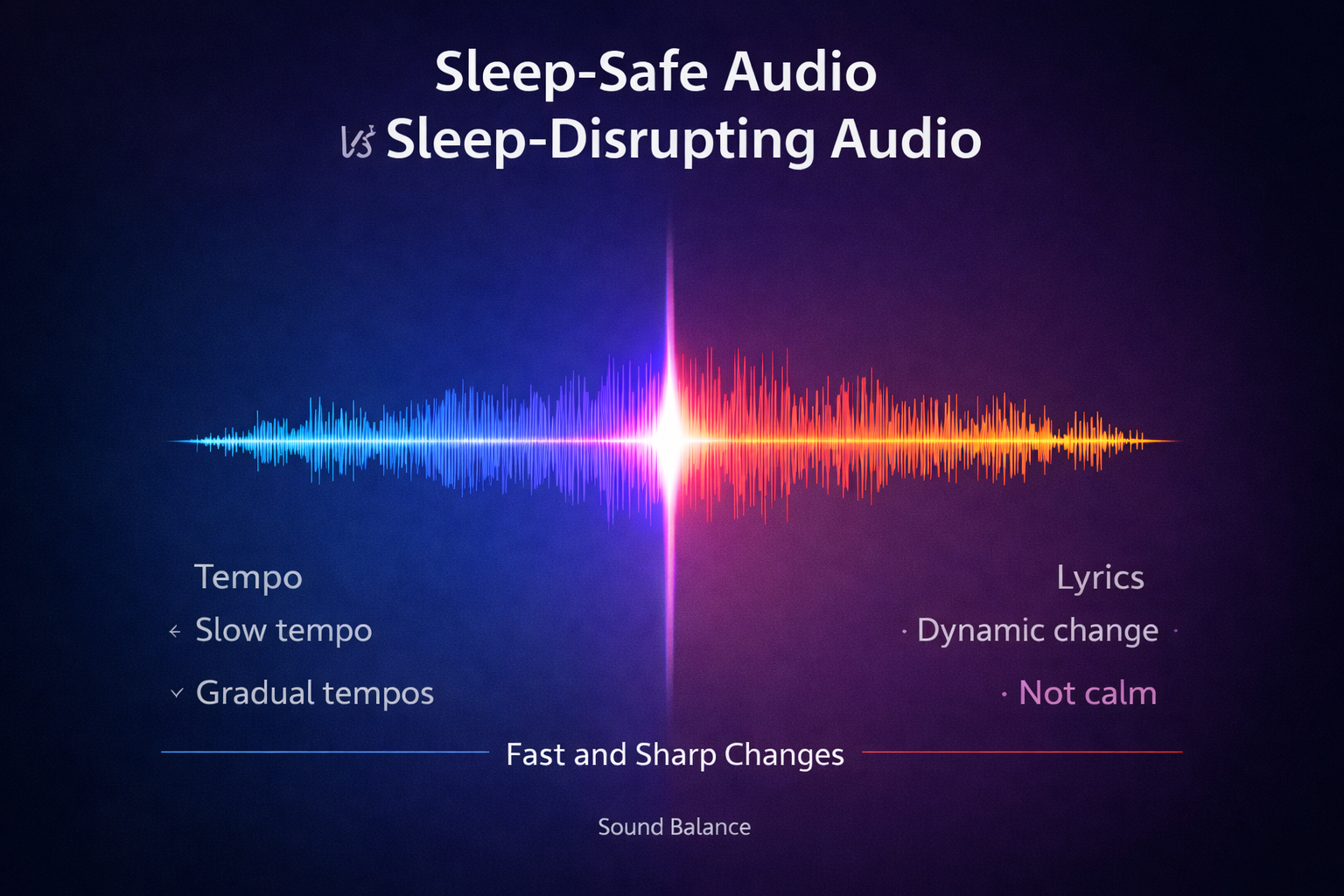
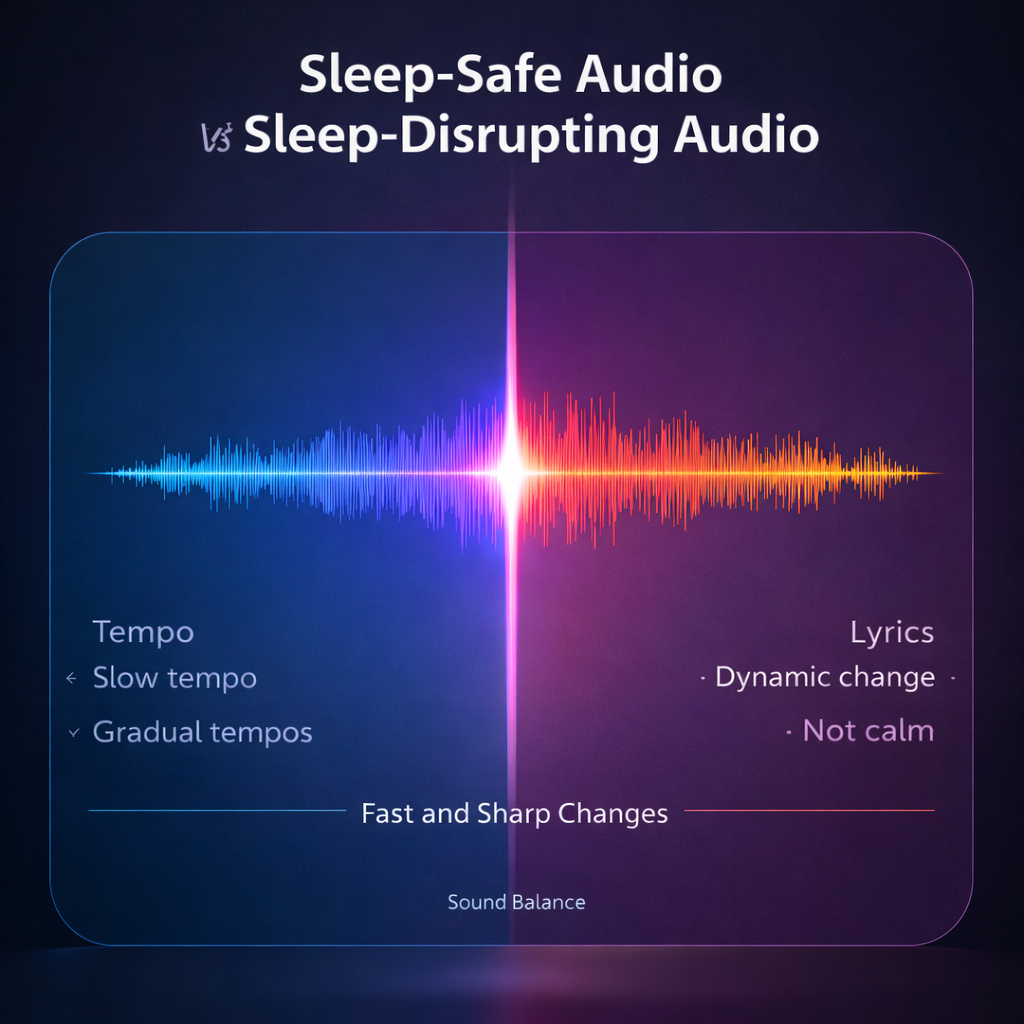
Some music does not relax the nervous system. Most relaxing sleep music is best created to be non-invasive and constant, so that your brain does not become alert and begin listening
Characteristics of Relaxing Sleep Music
Look for tracks with:
- Slow tempo (around 60–80 BPM): This range often feels calm and unhurried.
- Minimal lyrics (or none): Words can trigger memory, emotion, or mental imagery that keeps you mentally “online.”
- Consistent rhythm and gentle tones: Predictability supports relaxation.
- Soft, low-frequency elements: Warm pads, distant drones, and mellow instrumentals tend to feel grounding.
Sleep Music vs. Regular Music: What’s the Difference?
Ordinary music is frequently constructed to trigger emotion-large choruses, dramatic swings, catchy texts or powerful beats. It is good in workouts or to lift the mood, but at bedtime it is counterproductive.
Listning Soothing music for sleep is more about Having a relax sleepy night than entertainment. Upbeat tracks or emotionally intense songs can disrupt wind-down efforts, especially if they make you sing along, reminisce, or anticipate the next part.
Benefits of Calming Music for Better Sleep Quality
Used consistently, calming music can become a powerful cue that tells your brain, “It’s time to power down.”
1) Helps You Fall Asleep Faster
Many people struggle most with the first 15–30 minutes in bed. Relaxing sleep music can help you by:
- Reducing perceived “mental noise” (racing thoughts, replaying conversations)
- Creating a single, gentle focal point for attention
- Supporting a smoother transition into drowsiness (often called reduced sleep onset latency)
2) Improves Sleep Depth and Continuity
In case you wake easily at night, soft audio can be used to soothe the situation by masking sudden environmental sounds and reducing startling contrasts. For some sleepers, soothing sounds for sleep can mean:
- Less wake-ups from unpredictable noise
- A steadier sleep environment that feels “safe” and consistent
3) Enhances Morning Alertness and Mood
Better rest often translates into better next-day functioning. While only music isn’t a cure-all, improving the quality of your bedtime routine may support:
- Clearer morning focus
- More stable mood
- More energy for daytime habits that reinforce better sleep
Role of Royalty-Free Meditation Music in Sleep Improvement
If you plan to use music nightly, reliability matters. That’s where royalty free meditation music can be especially helpful.
What Is Royalty-Free Meditation Music?
The idea of royalty-free meditation music normally implies that, within the conditions of the licence, the creator of the song agrees to allow you to use it without leaving to pay any royalties. Its most useful aspect is that it allows regular sleepers to loop it, play at night, and make it a habit.
Why Royalty-Free Music Is Great for Sleep Routines
- No ads or interruptions: Sudden volume spikes or spoken ads can wake you awake.
- Consistent sound patterns: Repetition helps form habits. Your brain begins associating that specific sound with winding down.
- It is easier to create playlists that are sleep-safe: It is possible to choose those that remain calm throughout the playlist.
When creating a night playlist, it is advisable to make sure that you focus more on relaxing sleep music that does not radically switch after 30 or 60 minutes.
Best Types of Soothing Sounds for Sleep
Various individuals have different textures that they relax to. The following are the popular choices that go hand in hand with sleep.
Nature-Based Sounds
Nature audio is widely used because it feels familiar and non-demanding:
- Rainfall
- Ocean waves
- Forest ambience
- Wind through trees
These soothing sounds for sleep are especially useful for masking city noise.
Instrumental and Ambient Music
Common sleep-friendly instruments and styles include:
- Soft piano
- Flute or gentle strings
- Ambient pads and slow synthesizers
The key is restraint-tracks that feel like a background atmosphere rather than a performance.
Binaural and Ambient Tones
Some audio uses gentle layered tones designed to feel immersive and calming. Without getting technical, the goal is to create a steady sound “blanket” that encourages relaxation. If you try this category, keep volume low and choose reputable creators.
How to Use Soothing Music Effectively at Night
The how matters as much as the what. These habits can make soothing music significantly more effective.
Ideal Volume and Timing
- Volume: Keep it low-just loud enough to hear comfortably. If it dominates your attention, it’s probably too loud.
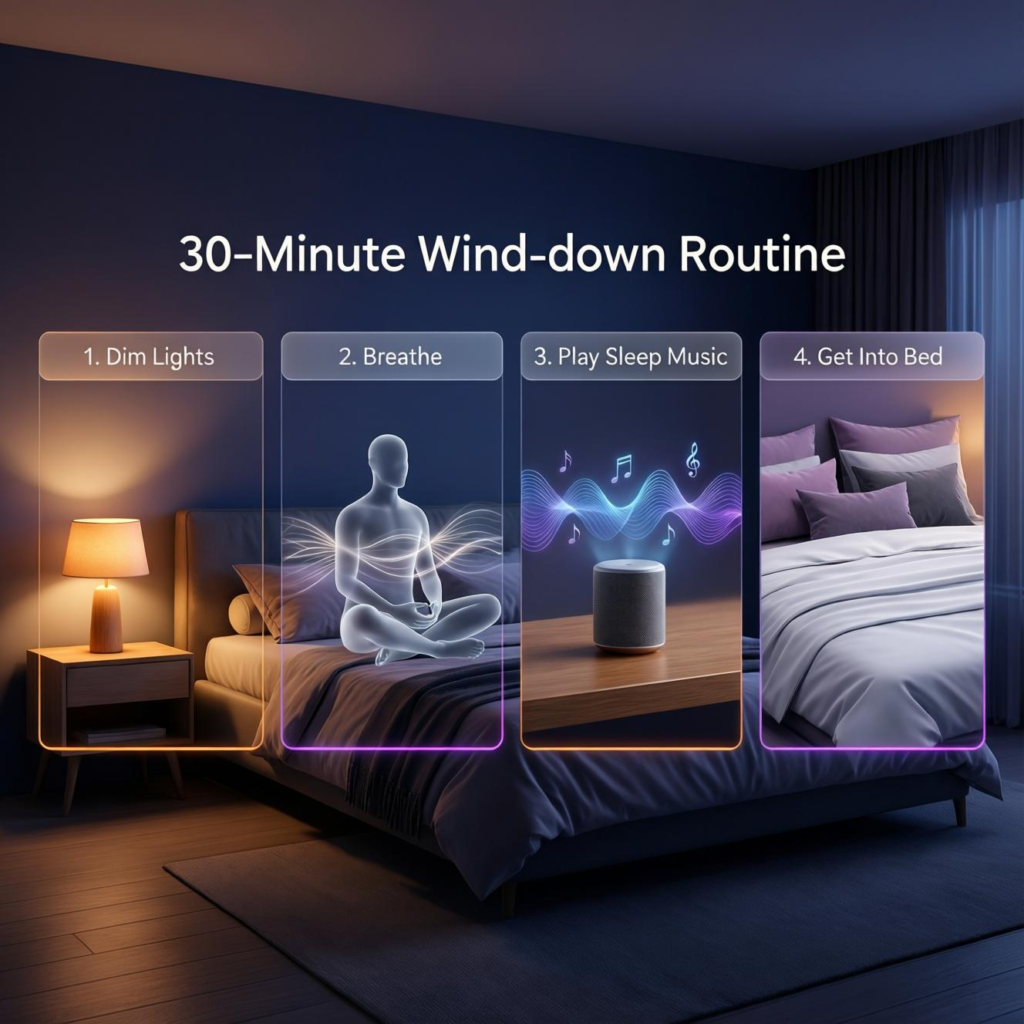
- Timing: Start 20–30 minutes before bedtime while you’re doing your wind-down routine (stretching, skincare, journaling, reading).
Headphones vs. Speakers
- Speakers (often best for sleep): More comfortable, less risk of pressure on ears, easier to maintain safe volume.
- Headphones: Useful if you share a room, but they can be uncomfortable and may fall out. If you use them, consider sleep-specific headbands at low volume.
Create a Consistent Sleep Ritual
Pair your calming music with cues that reinforce sleepiness:
- Dim lights (warm lamps over overhead lighting)
- A short breathing exercise (e.g., slow inhales/exhales for 2–5 minutes)
- A consistent bedtime and wake time
- A cool, uncluttered room
Common Mistakes to Avoid When Using Music for Sleep
- Playing music too loud (it should fade into the background)
- Choosing emotionally stimulating tracks (breakup songs, intense film scores, upbeat pop)
- Using devices with bright screens (blue light and notifications can sabotage your routine)
- Letting autoplay surprise you (set a sleep timer or a fixed playlist)
Conclusion
Small, simple habits bring about good sleep. Music is also a good way to calm your mind down to help you sleep, soft and calming music before bed can help your mind to relax and shut out those irritating noises that can interrupt your sleep. You do not require anything complex- just the sounds that are soothing. Select a soothing playlist, play it at a low volume, and listen to it during a couple of days at night. Gradually your brain will get to know that it is time to sleep. To get more easily accessible tips, music-related posts, etc., you can always visit our site on Legitloaded.
FAQ
Does soothing music really help improve sleep quality naturally?
For many people, yes-soothing music can help create a calmer pre-sleep state and make bedtime feel more consistent. It’s a gentle, natural approach that works best as part of a broader routine (lighting, temperature, consistent schedule).
Is calming music better than white noise for sleep?
Yes, a lot of people do. The connection between your playlist and drowsiness can be strengthened by using it at night. Just avoid abrupt track changes and keep the volume down.
Can I listen to relaxing sleep music every night?
Yes, a lot of people do. The connection between your playlist and drowsiness can be strengthened by using it at night. Just avoid Blunt track changes and keep the volume down.
What is the best type of royalty-free meditation music for sleep?
Look for royalty free meditation music with slow tempo, minimal or no lyrics, and long, consistent sections (30–60 minutes). Avoid tracks with abrupt transitions.
How long should I listen to soothing sounds before sleeping?
A good starting point is 20–30 minutes during your wind-down. If you prefer it overnight, set a timer for 30–90 minutes or choose a continuous low-volume track that won’t change suddenly.